



The Camera Eats First
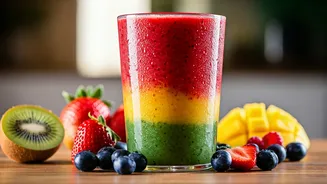
Before you even consider the taste, the modern smoothie’s primary job is to be beautiful. We’re in the era of visual dopamine, and the fruit smoothie is a master of the form. On TikTok and Instagram, it’s not enough for a smoothie to be nutritious; it must
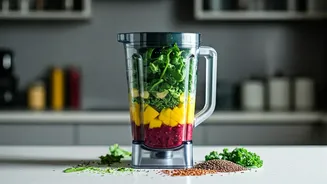
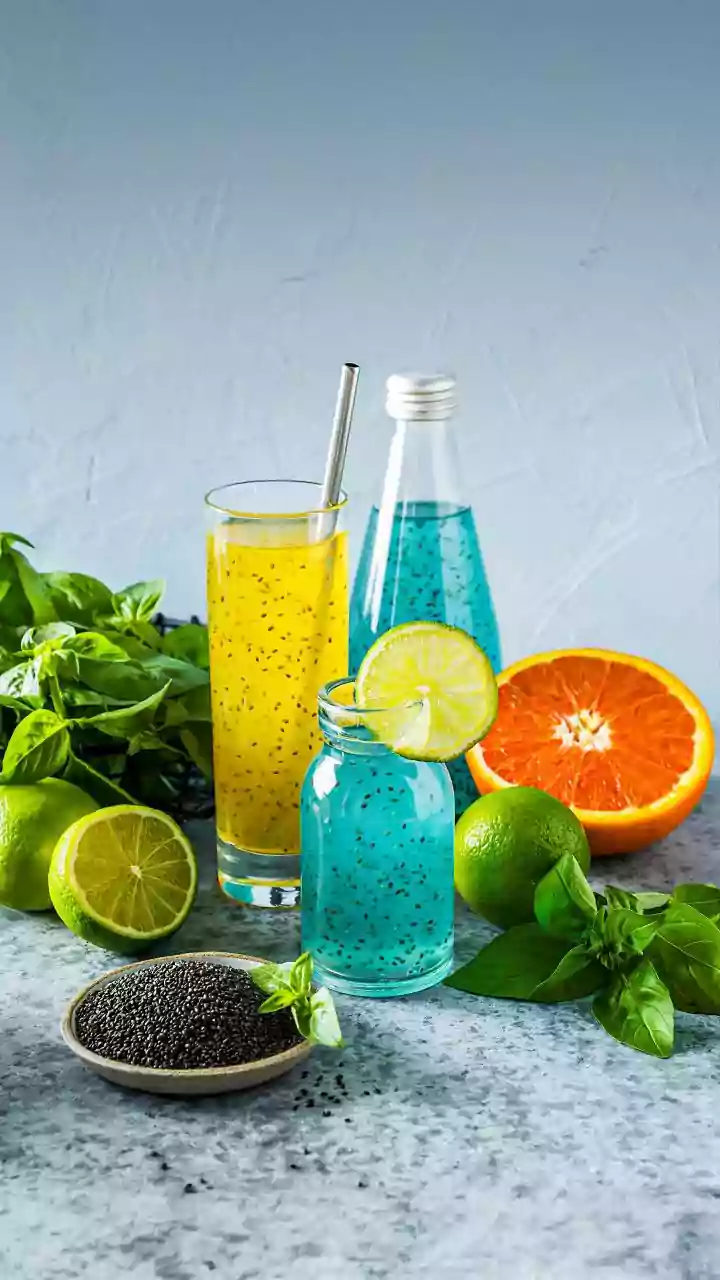
be an aesthetic experience. Think of the mesmerizing videos showing thick, impossibly vibrant purées being poured into a glass lined with streaks of coconut cream or spirulina. The colors are deliberately saturated—deep magenta from pitaya, rich green from matcha, or sunny yellow from mango. It’s a feast for the eyes, engineered for likes and shares. Smoothie bowls take this to another level, transforming from a meal into a canvas. Each bowl is meticulously decorated with symmetrical lines of sliced fruit, a sprinkle of granola, and a drizzle of nut butter, all designed to look stunning from a top-down camera angle. This isn’t just food; it's edible art, and its visual appeal is its currency in the attention economy.
The Erewhon Effect
Nowhere is the smoothie’s cultural power more evident than at Erewhon, the high-end Los Angeles grocery store that has become a tastemaker for wellness culture. The store’s celebrity-endorsed smoothies are not just drinks; they are limited-edition luxury goods. The most famous example is Hailey Bieber’s Strawberry Glaze Skin Smoothie, a $18 concoction of strawberries, avocado, hyaluronic acid, and sea moss gel. Its launch wasn’t just a menu update; it was a full-blown cultural event that generated millions of views and countless copycat recipes online. This phenomenon highlights a key shift: the smoothie as an aspirational product. Buying a celebrity smoothie isn't just about hydration; it’s about participating in a lifestyle. It’s a small, tangible piece of a curated, wellness-focused world that feels otherwise out of reach. For a few minutes, you can sip the same thing as a supermodel, and for social media, that’s content gold.
Wellness as a Vibe
The smoothie’s dominance is perfectly aligned with the evolution of “wellness.” Today, wellness is less a strict regimen and more of a flexible, aesthetic-driven “vibe.” A green smoothie signals health, intentionality, and self-care without the baggage of a grueling workout or a restrictive diet. It’s an easy, photogenic way to perform healthiness. Holding a smoothie is a visual shorthand for “I’m taking care of myself.” This taps into a powerful desire for control and order in a chaotic world. The ritual of making a smoothie—gathering fresh ingredients, the satisfying whir of the blender, the final pour—is itself a calming, mindful practice. It’s a low-effort, high-reward activity that delivers both a feeling of virtue and a beautiful image to post online, checking two major boxes for the modern consumer.
From Aspiration to DIY Creation
While the $18 celebrity smoothie grabs headlines, the trend’s real staying power comes from its democratic, DIY arm. For every viral Erewhon smoothie, there are thousands of TikTok creators sharing their own, more accessible versions. These videos demystify the process, showing viewers how to replicate the aesthetic at home with ingredients from their local supermarket. This user-generated content is crucial. It keeps the trend from feeling too exclusive or out of touch. A creator making a “Hailey Bieber smoothie for less” not only provides a service but also becomes part of the broader cultural conversation. This cycle of aspiration and recreation is what makes trends stick on social media. The smoothie is the perfect vehicle for it: endlessly customizable, visually appealing, and simple enough for anyone with a blender to try, film, and share.