




An Oasis Forged by Kings
To understand Udaipur is to understand its water. Unlike Venice, which grew from a natural lagoon, Udaipur’s iconic lakes are a marvel of human ingenuity. Founded in the 16th century by Maharana Udai Singh II, the city was built around a series of interconnected,
man-made lakes, principally Lake Pichola and Fateh Sagar Lake. This wasn't just for aesthetics; it was a sophisticated water management system designed to sustain a kingdom in a parched desert region. This act of creation, of bringing life-giving water to the desert, is the foundational story of Udaipur’s romance. The city’s entire identity—its palaces, its gardens, its very orientation—is a tribute to the lakes that give it life. The views aren’t just pretty scenery; they are a constant reminder of a dynasty’s vision and its triumph over geography.
The Floating Palace of Lake Pichola
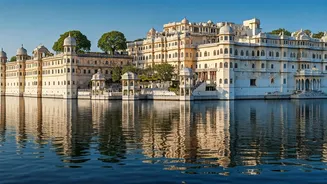
At the heart of this romantic narrative is the Taj Lake Palace. Seemingly floating on the serene waters of Lake Pichola, this ethereal structure of white marble is the city's crown jewel. Originally built in the 1740s as Jag Niwas, a royal summer palace for the Mewar dynasty, it was conceived as a place for pleasure and leisure, far from the formalities of the court. Accessible only by boat, its isolation adds to its mystique. From a distance, it appears to hover between water and sky. Up close, its courtyards are filled with fountains, its walls inlaid with intricate stonework, and its windows frame postcard-perfect views of the City Palace on the shore. This single image—a luminous palace adrift on a tranquil lake—has come to define not just Udaipur, but the very idea of palatial Indian romance for a global audience, famously serving as a key location in the James Bond film *Octopussy*.
Romance on the Rooftops and Ghats
While the Lake Palace is the showstopper, Udaipur’s romance is a democratic affair, accessible from countless vantage points. The entire Old City is a maze of winding alleys that unexpectedly open up to breathtaking lake views. The shores are lined with *ghats*—stone steps leading down to the water—which are hubs of local life, from morning rituals to evening ceremonies. As the sun begins to set, the city’s many rooftop restaurants and bars come alive. Here, perched high above the labyrinthine streets, you can watch the sky blush from pink to orange, casting a golden glow on the water and the sandstone facades of the City Palace complex. The gentle lapping of water, the distant sound of temple bells, and the sight of the palaces lit up against the dark Aravalli Hills create a multi-sensory experience that feels both timeless and deeply personal.
A Boat Ride into Sunset
Ultimately, the best way to experience Udaipur’s magic is from the water itself. A slow boat ride on Lake Pichola during the “golden hour” before sunset is a quintessential city ritual. As you glide past the grand City Palace, the bathing ghats, and the sanctuary of Jag Mandir island, the city reveals itself from its most flattering angle. The setting sun backlights the ornate balconies and domes, turning the buildings into dramatic silhouettes. The water reflects the sky’s fiery colors, blurring the line between the real and the reflection. It’s in these quiet moments on the water that you realize Udaipur's romance isn't just about grand gestures or historical opulence. It’s about the serene, captivating beauty of a city that has made a lake its heart, its soul, and its unending source of enchantment.