








The 'Why' Behind the Walk
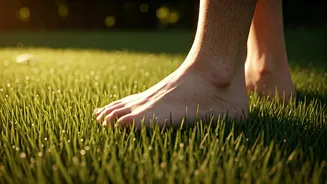
The idea of walking barefoot on grass to feel better isn't new. It’s the core of a practice known as “grounding” or “earthing,” which posits that direct physical contact with the earth’s surface has unique wellness benefits. While some of the more esoteric
claims about electrical charges lack robust scientific consensus, the underlying principle taps into something very real and well-documented: the profound psychological and physiological benefits of interacting with nature. More than anything, it’s a powerful act of disconnection. In a world that demands constant cognitive engagement, taking off your shoes and feeling the cool, textured ground beneath your feet forces you out of your head and into your body. It’s a sensory reset button that pulls your attention away from digital screens and spiraling work thoughts.
More Than Just a Stroll
The key to this practice is in the headline’s own instruction: make it “rhythmic.” This isn't about aimlessly wandering while checking your phone. It’s about transforming a simple action into a mindful ritual. The goal is to create a rhythm with your steps and your breath. As you walk, try to sync your breathing to your movement—perhaps inhaling for three steps and exhaling for four. Focus entirely on the physical sensations: the feeling of individual blades of grass under your arches, the dampness of the soil, the subtle changes in temperature. This deliberate focus turns a walk into a form of moving meditation. It anchors you in the present moment, creating a mental barrier against the intrusive anxieties of your workday. By concentrating on the simple, repetitive motion, you give your brain’s prefrontal cortex—the part responsible for planning and worrying—a much-needed break.
The Science of a Green Break
Stripping away the jargon, the benefits of this practice are supported by several pillars of established science. First, exposure to green spaces is consistently shown to lower cortisol, the body’s primary stress hormone. Even a few minutes in a natural setting can reduce blood pressure and heart rate. This is often linked to the concept of “biophilia,” our innate tendency to seek connections with nature. Second, the practice is a form of sensory mindfulness. By directing your focus to the feeling of your feet on the ground, you are engaging in an activity that interrupts the rumination cycle—the repetitive, negative thought patterns that fuel anxiety. Attention Restoration Theory suggests that nature provides a “soft fascination,” gently holding our attention without cognitive effort, which helps restore our capacity to focus on demanding tasks later. In essence, you’re combining gentle exercise, nature therapy, and mindfulness into one simple, effective package.
How to Start Your Practice
Integrating this into your day is simpler than you think. You don’t need a sprawling meadow; a small, clean patch of lawn at home, in a park, or even outside your office building will suffice. Start small. Dedicate just five to ten minutes during a lunch break or before your workday begins. Find a spot you know is safe and relatively clean. Kick off your shoes and socks, stand for a moment, and just notice the sensation. Begin walking at a slow, deliberate pace. Pay attention to your posture—stand tall, let your shoulders relax. Let your feet land naturally. There’s no right or wrong way to feel; the goal is simply to notice. Some days you might feel a profound sense of calm, other days just the simple pleasure of cool grass. The consistency of the ritual is more important than achieving a specific state of mind.
A Quick Word on Safety
While beautifully simple, walking barefoot outdoors requires a bit of common sense. Always be aware of your surroundings. Before you start, visually scan the area for sharp objects like glass, rocks, or thorns. Be mindful of insects, especially ticks in taller grass or fire ants in warmer climates. If you have allergies, be aware that you'll be in direct contact with pollen and other potential allergens. Finally, consider what the lawn may have been treated with. Avoid walking on grass that has recently been sprayed with pesticides or herbicides. After your walk, it’s a good habit to quickly inspect your feet and wash them. A little bit of caution ensures the practice remains a purely restorative one.