










The Touchdown Heard Around the World
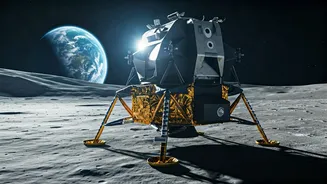
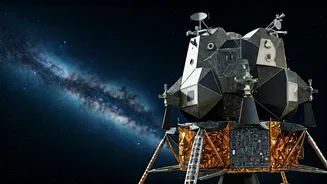
The mission was Chandrayaan-3, and its destination was the lunar south pole, a treacherous, crater-filled region where no country had ever successfully landed. When the Vikram lander touched down, India not only joined the elite club of moon-landing nations
(alongside the U.S., the former Soviet Union, and China) but became the first to conquer this specific, highly coveted territory. Why the south pole? Scientists believe its permanently shadowed craters hold vast quantities of water ice. This ice could one day be used for drinking water, breathable oxygen, and even rocket fuel, making it the most valuable real estate for future lunar bases. By planting its flag there, India didn't just complete a mission; it secured a strategic foothold in the next chapter of space exploration.
The Secret Sauce: Frugal Innovation
Perhaps the most startling aspect of India's success is how little it cost. The entire Chandrayaan-3 mission was budgeted at about $75 million. To put that in perspective, it's less than the production budget for Hollywood movies like *Gravity* or *The Martian*. It's a fraction of what NASA or other space agencies typically spend on similar endeavors. This isn't a fluke; it's a philosophy. The Indian Space Research Organisation (ISRO) has perfected what's known as 'jugaad' innovation—a knack for creative, low-cost problem-solving. ISRO achieves this by building on previous designs, maximizing the use of domestic technology, and pursuing a pragmatic, step-by-step approach. This cost-effective model is profoundly disruptive. It proves that becoming a space power doesn't require a superpower's budget, opening the door for other developing nations to follow suit and challenging the established order.
A Journey from Bicycles to Boosters
India's space program has always been defined by ambition that outpaced its resources. Iconic photos from the 1960s show ISRO scientists transporting rocket parts on the back of bicycles and bullock carts. The program was born not out of a Cold War rivalry, but from a desire to use space technology for national development—improving weather forecasting for farmers, enabling satellite television for remote villages, and aiding in disaster management. This practical, society-first focus has remained at the core of ISRO's identity. But over the decades, that quiet competence has grown into world-class capability. The Mars Orbiter Mission in 2014, which successfully reached Martian orbit on its first try for a cost of just $74 million, was a sign of things to come. The Chandrayaan-3 landing was the culmination of that long, patient journey from humble beginnings to the lunar surface.
The Dreams: What Comes Next?
The moon landing was not a finish line but a starting block. ISRO's pipeline is filled with ambitious projects that constitute India's 'space dreams.' The Gaganyaan program aims to send Indian astronauts into orbit, making it the fourth country to achieve human spaceflight capability. The Aditya-L1 mission, already launched, is a solar observatory studying the sun from a unique vantage point in space. Plans are also firming up for Shukrayaan, an orbiter mission to Venus, and a follow-up to the successful Mars orbiter. Beyond specific missions, India is fostering a booming private space industry, encouraging startups to build satellites and rockets. The ultimate goal is to become a comprehensive space power with capabilities in exploration, commercial launch services, and potentially even interplanetary travel. This isn't a wish list; it's a funded, national-priority roadmap.
A New Player in a New Space Race
India's rise is happening at a pivotal moment. The 21st-century space race isn't just a U.S.-Russia dynamic; it's a multipolar competition with China emerging as a formidable force. India's success provides a powerful democratic counterweight. For the United States and its allies in the Artemis Accords—a framework for peaceful lunar exploration—India is an increasingly vital partner. It offers not only technological prowess but also a shared commitment to a rules-based international order in space. As competition for lunar resources and strategic positions intensifies, India's role as a collaborative and innovative power will become ever more crucial. The world is paying attention because India isn't just dreaming about space; it's actively and affordably reshaping humanity's future in it.