





A Historic Touchdown on the Moon
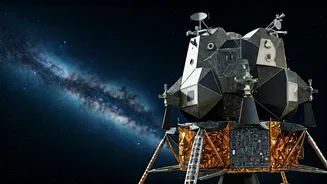
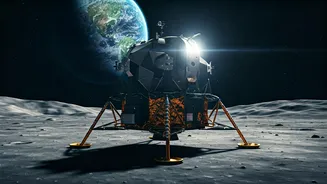
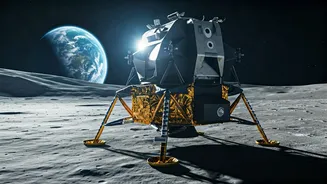
Let’s start with the big one: Chandrayaan-3. In August 2023, the Indian Space Research Organisation (ISRO) did what no other country had ever done—it soft-landed a spacecraft near the lunar south pole. This region is a hotbed of scientific interest because
it’s believed to contain water ice in its permanently shadowed craters. Finding and potentially utilizing that ice is a game-changer for future long-term lunar bases. While the U.S., the former Soviet Union, and China had all reached the Moon, India’s achievement was a masterstroke of precision and ambition, instantly elevating its status. It was made even more dramatic by the fact that a Russian probe, Luna-25, had crashed while attempting a similar landing just days earlier. The success was met with a massive outpouring of national pride in India and put the world on notice that ISRO is a serious, capable agency.
The Secret Sauce: Frugal Innovation
The most stunning part of India's space story isn't just what it accomplishes, but how cheaply it does it. This isn't your grandfather's cost-plus NASA contract. ISRO has mastered what's often called “frugal engineering” or “Jugaad”—a uniquely Indian approach to innovating with limited resources. The numbers are staggering. The Mars Orbiter Mission (Mangalyaan), which successfully reached Mars in 2014, cost about $74 million. For context, NASA’s MAVEN Mars orbiter, launched around the same time, cost $671 million. Famously, India’s Mars mission cost less than the Hollywood movie *Gravity* ($100 million). This incredible cost-effectiveness isn’t about cutting corners on safety; it's about simplifying designs, using off-the-shelf components where possible, and maintaining a lean, focused team. This makes India not just a scientific power, but a disruptive economic force in the global launch and satellite market.
It's Not Just a Government Program
While ISRO remains the star, India’s ambitions are much bigger than just government missions. In recent years, the Indian government has deliberately opened the space sector to private companies, creating a booming ecosystem of startups. This is a strategic pivot designed to mimic the success of SpaceX and other private players in the United States. Companies like Skyroot Aerospace and Agnikul Cosmos are developing their own small-payload rockets, aiming to capture a slice of the lucrative global satellite launch market. By letting private industry handle the routine work of launching commercial satellites, ISRO is freed up to focus on more ambitious, scientific goals: a human spaceflight program (Gaganyaan), a mission to Venus, and plans for its own space station by 2035. This public-private partnership is the engine that will fuel India's long-term growth as a space power.
The Geopolitics of the Final Frontier
Ultimately, the growing global interest in India’s space program is about more than just science or business; it’s about geopolitics. In an era defined by the growing rivalry between the United States and China, space is a critical arena for influence. India, as the world’s largest democracy, represents a crucial third pole. The U.S. sees India as a natural partner. In 2023, India signed the Artemis Accords, a U.S.-led framework for cooperation in lunar exploration, signaling a deepening alignment with Washington and its allies. For the U.S., a strong Indian space program is a valuable counterweight to China’s secretive and military-linked space ambitions. India provides a democratic, transparent, and increasingly capable partner for everything from satellite launches to deep-space exploration, fundamentally reshaping the 21st-century race for the heavens.