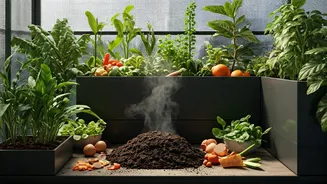





What Exactly Is Composting?
At its heart, composting is simply nature’s recycling program, harnessed in your own backyard or kitchen. It's the process of letting organic materials—like food scraps and yard trimmings—decompose in a controlled way. Microorganisms, such as bacteria
and fungi, work to break everything down, transforming what was once garbage into a dark, crumbly, nutrient-rich material that looks like soil. Gardeners have long called this finished product 'black gold' for its incredible ability to improve soil health, retain moisture, and provide essential nutrients for plants. Instead of throwing away valuable organic matter, composting closes the loop, turning waste into a resource.
Why Bother? The Problem with Landfills
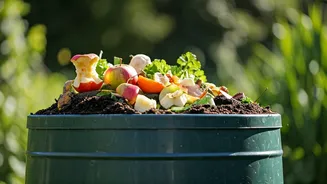
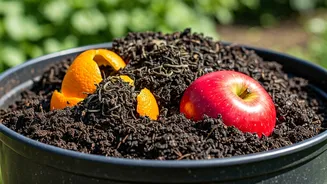
When you toss an apple core into the trash, it seems harmless. But once it’s sealed in a plastic bag and buried in a landfill, it causes problems. Unlike in a compost pile, organic waste in a landfill breaks down without oxygen, a process called anaerobic decomposition. This releases methane, a greenhouse gas that is significantly more potent than carbon dioxide at trapping heat in the atmosphere. According to the EPA, food is the single largest category of material placed in municipal landfills, where it emits that powerful methane gas. By composting, you directly divert this waste from the landfill, reducing your household's carbon footprint and helping to combat climate change in a tangible, immediate way.
The Golden Rule: Your 'Greens' and 'Browns'
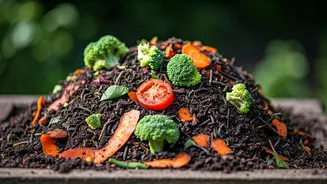
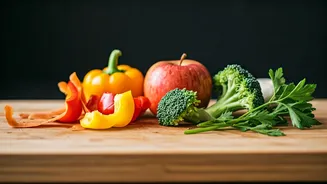
Successful composting isn't complicated; it just requires a simple recipe. The key is to balance two types of materials: 'greens' and 'browns.' 'Greens' are nitrogen-rich materials that provide protein for the hardworking microbes. Think of fresh, moist items like fruit and vegetable scraps, coffee grounds, tea bags, and fresh grass clippings. 'Browns' are carbon-rich materials that provide energy for the microbes and add bulk to prevent the pile from becoming a slimy, smelly mess. These are typically dry, woody items like dried leaves, straw, shredded newspaper (not the glossy ads), cardboard, and wood chips. A healthy compost pile should have roughly two to three times as much brown material as green material by volume. This balance ensures the pile stays aerated, decomposes efficiently, and doesn't attract pests or produce unpleasant odors.
What to Compost (and What to Avoid)
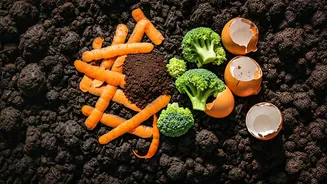
Most of your kitchen and yard waste is fair game. A good starter list of things to compost includes fruit and vegetable scraps, eggshells, coffee grounds and filters, tea bags, nut shells, and yard trimmings like grass clippings and leaves. You can also add shredded newspaper, cardboard, and paper towels. However, it’s just as important to know what to leave out. Avoid adding meat, fish, bones, and dairy products, as these can create strong odors and attract pests like rodents and raccoons. Steer clear of fats, grease, and oily foods, which can disrupt the moisture balance of your pile. Finally, don't compost pet waste (which can contain pathogens) or plants that have been treated with pesticides.
Getting Started: Your First Bin
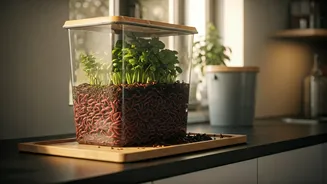
You don't need a lot of space or fancy equipment to start composting. The simplest method is an open-air pile in a corner of your yard, where you can layer your greens and browns and turn them occasionally with a pitchfork. For a tidier look, you can build a simple bin using wood pallets or wire mesh. If you live in an apartment, have a small yard, or are concerned about pests, a closed-bin system is an excellent choice. These range from stationary plastic bins to tumblers that make it easy to mix and aerate your compost with just a few cranks. There are even small, countertop electric composters or worm bins (vermicomposting) that can be kept indoors or on a balcony. The best system is the one that fits your space, budget, and lifestyle.