


Not Your Grandfather’s Terrazzo
If you hear “terrazzo” and picture a mid-century school hallway or a dated airport floor, it’s time for a reintroduction. While traditional terrazzo—a composite of marble, quartz, or granite chips set in cement—has been around for centuries, today’s iteration
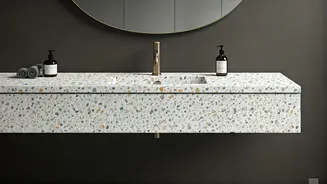
is a different beast entirely. The key is in the first word of the trend: recycled. Modern recycled terrazzo utilizes post-consumer and post-industrial waste that would otherwise clog landfills. Think chips of colored glass from discarded bottles, shattered porcelain, and leftover marble fragments from quarry operations. These reclaimed aggregates are suspended in a modern, often resin-based binder, which is lighter, more flexible, and offers a wider color palette than traditional cement. The result is a surface that tells a story, with each fleck and fragment representing a piece of a circular economy. It’s the perfect blend of old-world Italian craftsmanship and 21st-century environmental consciousness.
The Ultimate Sustainability Statement
In the world of premium design, luxury is increasingly defined by thoughtfulness and sustainability, not just price. This is where recycled terrazzo truly shines and a core reason architects are specifying it for top-tier projects. Choosing a countertop made from recycled materials is a tangible commitment to environmental responsibility. It diverts waste, reduces the demand for virgin quarried stone (a resource-intensive process), and often has a lower carbon footprint associated with its production and transport. For homeowners and designers looking to build with intention, a recycled terrazzo countertop isn't just a surface; it's a statement. It says that beauty and environmental stewardship can coexist. This narrative is incredibly powerful in a market where consumers are looking for ways to align their purchasing decisions with their values, turning a simple bathroom renovation into a project with a positive impact.
A Canvas for Custom Creation
The off-the-shelf, one-size-fits-all approach feels outdated in premium design. Clients want personalization, a unique fingerprint on their space. Recycled terrazzo delivers this in spades. Because it’s a composite material, the possibilities for customization are virtually limitless. Designers can work with fabricators to create completely bespoke blends. Want a countertop with chips of ocean-blue and sea-green glass to evoke a coastal vibe? Done. Prefer a sophisticated, neutral palette with flecks of black and gray porcelain for a minimalist feel? Easy. The color of the resin binder itself can be tinted to match any paint swatch, creating a perfectly cohesive look. This level of artistic control allows a bathroom countertop to become a central piece of art, a focal point that ties the entire room together. It moves beyond a purely functional surface to become a highly personal and expressive element of the home’s design.
Beauty Backed by Brawn
A premium material must perform, especially in a demanding environment like a bathroom. While its eco-credentials and good looks get it in the door, recycled terrazzo’s practicality is what closes the deal. The modern resin binders often used in its creation make the surface non-porous, a crucial feature for bathrooms. Unlike natural stones such as marble, which can be prone to staining from makeup or colored soaps, a properly sealed terrazzo surface is highly resistant to stains and water damage. It’s also incredibly durable, standing up to the daily wear and tear of dropped items and heat from styling tools without easily chipping or cracking. Cleaning is simple—usually just soap and water. This combination of robust performance and low maintenance makes it a smart long-term investment, ensuring that the beautiful, custom surface chosen today will remain that way for years to come.