




So, What Exactly Is This Festival?
Known as the Rath Yatra, or the “Festival of Chariots,” this annual event is a massive Hindu procession held in the state of Odisha on India’s eastern coast. It’s one of the oldest and largest public gatherings on Earth. While the headline points to June
23, the festival’s date is based on the Hindu lunar calendar, typically falling in June or July. The premise is simple but profound: three revered deities leave the inner sanctum of their grand temple for a nine-day “vacation,” traveling in public for all to see. For the millions who attend, it’s a rare and sacred opportunity to see their gods up close, outside the temple’s confines.
Meet the Honored Guests
The festival revolves around three deities: Lord Jagannath, an incarnation of the Hindu god Vishnu; his elder brother, Balabhadra; and their sister, Subhadra. Unlike the detailed marble or metal idols seen in many Hindu temples, these figures are carved from wood in a distinct, abstract style with large, round eyes and no legs. This unique form has deep mythological roots, representing a more primal and accessible vision of the divine. They reside in the famous Jagannath Temple in Puri, a 12th-century marvel that is one of Hinduism's most sacred pilgrimage sites. The Rath Yatra is the only time of year they venture out, making the procession an incredibly auspicious event.
The Real Stars: Temples on Wheels
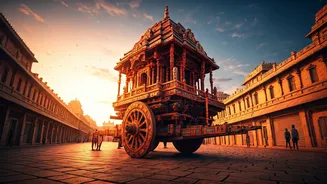
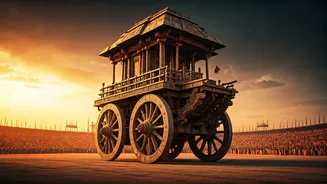
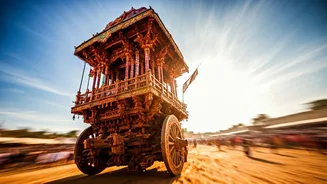
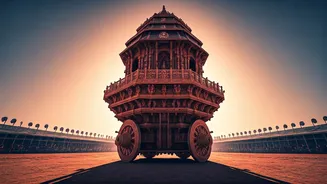
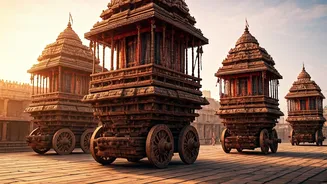
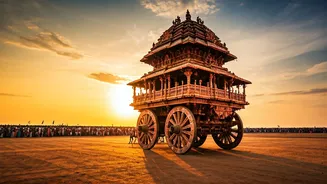
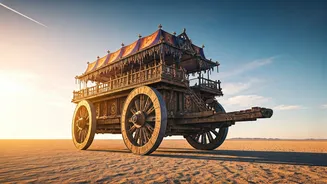
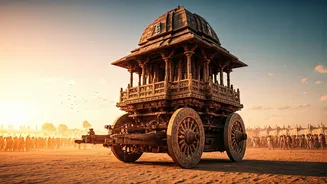
The “Yatra,” or journey, is made possible by the “Raths”—the chariots. And these are no simple carts. Think of them as mobile temples, each constructed fresh every year from specific types of wood by artisan families who have held this duty for generations. Lord Jagannath’s chariot, Nandighosha, is the largest, standing about 45 feet tall with 16 massive wheels, each seven feet in diameter. Adorned with vibrant red and yellow fabrics, intricate carvings, and towering canopies, these structures are architectural wonders in their own right. The sheer scale is breathtaking; they are pulled not by animals, but by the raw manpower of thousands of devotees.
A Journey of Devotion and Unity
The procession route is a two-mile stretch from the main Jagannath Temple to the Gundicha Temple, considered the deities' 'aunt's house.' For devotees, pulling the thick coir ropes attached to the chariots is an act of immense spiritual merit, a way to connect directly with the divine and have their sins cleansed. The air thickens with the sound of gongs, conch shells, and chants of “Jai Jagannath!” (Victory to Jagannath). It is an overwhelming sensory experience. Crucially, the festival breaks down social barriers. Historically, it was a time when people from all castes, who might not be allowed inside the main temple, could participate equally and receive the gods’ blessings.
The Sea of Humanity
The headline’s promise of “huge crowds” is an understatement. The Rath Yatra regularly attracts over a million people to Puri. The city swells as pilgrims arrive from all corners of India and the world. The main street, Bada Danda, transforms into a slow-moving river of people, all focused on the three majestic chariots lumbering through their midst. It’s a scene of organized chaos, a powerful testament to collective faith that has played out for centuries. The English word “juggernaut,” meaning an unstoppable force, is derived from Jagannath, inspired by colonial-era accounts of the overwhelming power of the festival’s chariots and crowds.