





The Pre-Rain Pruning Principle
It might seem counterintuitive to prune just before the heavens open up, but the logic is rooted in plant health and disease prevention. Think of a fresh pruning cut as an open wound. When you prune a plant during or immediately after rain, water sits
on these vulnerable surfaces, creating the perfect breeding ground for fungal and bacterial pathogens. Spores floating in the air or splashed up from the soil can easily infect the plant through these wet, open cuts. Pruning in dry weather gives the plant precious time—even just a few hours—to begin the process of compartmentalization, where it starts to form a protective layer over the wound. This natural barrier is far more effective at warding off infection than a raw, wet cut. Furthermore, strategic pruning improves air circulation. By thinning out dense, crowded branches, you allow air to move freely through the plant's canopy. After the rain passes, this increased airflow helps the foliage dry much more quickly, dramatically reducing the amount of time that disease-causing organisms have to take hold. In essence, you’re not just tidying up; you're actively engineering a less hospitable environment for common garden scourges like powdery mildew, black spot, and fire blight.
Your Pre-Rain Hit List
This isn't the time for a massive, landscape-altering overhaul. Your pre-rain pruning should be strategic and focused. Start with the classic 'three Ds': any wood that is dead, damaged, or diseased. These branches are not only unsightly but are magnets for pests and further decay, and removing them is the top priority. Next, look for branches that are crossing, rubbing against each other, or growing back toward the center of the plant. These create friction wounds and block light and air, so thinning them out is an immediate benefit. Pay special attention to plants known for dense growth, like roses, hydrangeas (depending on the type), and fruit trees. On roses, for example, clearing out the center canes can make a world of difference in preventing black spot. For trees, removing a few smaller, inward-facing branches can significantly improve the health of the entire structure. The goal is a plant that looks open and balanced, ready to receive rain without becoming a soggy, disease-prone mess.
The Right Tools and Technique
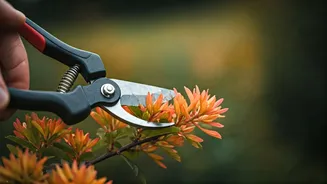
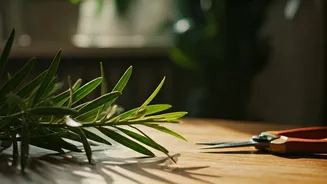
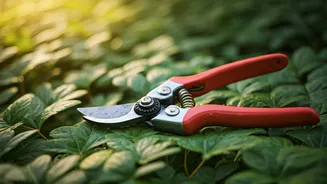
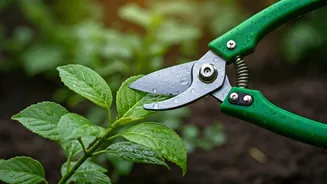
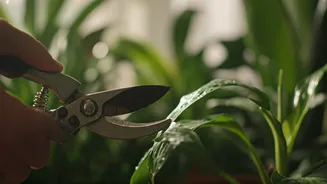
Using the wrong tools is almost as bad as not pruning at all. For this task, you need three key things: clean tools, sharp tools, and the right tool for the branch size. Before you start, wipe the blades of your pruners, loppers, and saws with a solution of household disinfectant or rubbing alcohol. This simple step prevents you from accidentally spreading disease from one plant to another. Sharp blades are equally non-negotiable. A sharp bypass pruner makes a clean, swift cut that the plant can heal easily. A dull blade, by contrast, crushes and tears stem tissue, creating a ragged wound that is much more susceptible to infection. Use handheld bypass pruners for stems up to the thickness of a pencil. For anything larger, up to about an inch and a half, switch to long-handled loppers to get better leverage. For branches thicker than that, use a sharp pruning saw. Always make your cuts at a slight angle, about a quarter-inch above an outward-facing bud. This encourages new growth to point away from the center of the plant, further promoting good structure and air circulation.
What to Leave Alone for Now
Enthusiasm is great, but it’s important to know what not to cut. The primary rule is to avoid majorly pruning any spring-flowering shrubs that bloom on 'old wood'—growth from the previous year. This includes popular plants like lilacs, forsythia, rhododendrons, and some types of hydrangeas (like Oakleaf and Bigleaf varieties). If you prune them now, you’re simply cutting off all the flower buds that were set to bloom in the coming season. The proper time to prune these plants is immediately after they finish flowering. Similarly, this is not the time for aggressive structural pruning or 'topping' a tree. Pre-rain pruning is a maintenance task focused on health and airflow, not a full-scale renovation. Stick to the 'three Ds' and thinning out crossing branches. Save the major reshaping projects for the dormant season when the plant is less stressed and you can better see its structure.