






The End of an Outdated System
For decades, the definition of “healthy” on a food package has been surprisingly out of sync with modern nutrition science. The original rules, established in the 1990s, were laser-focused on total fat content. This created a strange reality where sugary,
low-fat cereals and snack bars could sport a “healthy” claim on their box, while naturally high-fat (but nutrient-dense) foods like avocados, nuts, and salmon were shut out. This “health halo” effect often misled consumers into believing they were making a good choice when the nutritional reality was far more complex. The Food and Drug Administration (FDA) has acknowledged that these standards are obsolete and contribute to public confusion, prompting a long-overdue overhaul to align labels with what we now know about balanced diets.
Redefining “Healthy” for the 21st Century
The FDA’s proposed new rule fundamentally changes the criteria for the “healthy” claim. Instead of just penalizing fat, the new standard takes a more holistic, food-group-based approach. To qualify as “healthy,” a product must contain a meaningful amount of food from at least one of the recommended food groups (like fruits, vegetables, or dairy) and stay below strict new limits for three key nutrients: added sugar, sodium, and saturated fat. This simple shift has massive implications. Under the new guidelines, a water-packed can of salmon would qualify. Plain, unsweetened yogurt would make the cut. However, many popular sweetened yogurts, breakfast cereals, and granola bars that currently fly under a banner of health would lose their eligibility due to high levels of added sugar. The goal is to make the “healthy” claim a truly reliable indicator for shoppers.
Front-of-Package Warnings Are Coming
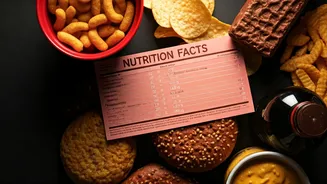
Beyond redefining a single word, the FDA is also developing a standardized, front-of-package (FOP) labeling system. The idea is to give consumers an at-a-glance signal about a food’s nutritional content without needing to squint at the fine print of the Nutrition Facts panel. While the exact design is still being tested, the agency is researching systems used in other countries, like Canada, Mexico, and Chile. These often take the form of simple, graphic symbols—like a stop sign or a traffic light—that clearly indicate when a product is high in nutrients of public health concern, such as sugar, sodium, or saturated fat. This move is aimed squarely at the processed and junk foods that make up a significant portion of the American diet. A bag of potato chips, a frozen pizza, or a can of soda could soon feature a clear, unmissable icon on its front, warning consumers about its contents.
What This Means for Shoppers and Brands
For consumers, this is a significant step toward transparency. The changes are designed to make it easier to make informed choices quickly in a busy supermarket. Public health advocates have applauded the move as a crucial tool in combating diet-related chronic diseases like obesity and type 2 diabetes. However, the food industry’s reaction is more complex. While some brands are already reformulating their products to meet the new standards, others are pushing back. Critics argue that FOP warnings may oversimplify nutrition and demonize certain foods without considering overall dietary patterns. They also face the immense logistical and financial challenge of redesigning packaging and, in many cases, fundamentally changing recipes for beloved products that will no longer meet the “healthy” threshold or will require a warning label. The transition will likely be gradual, but the direction is clear: the days of ambiguous health claims on junk food are numbered.