



What Exactly Are Soil-Free Plants?
Don’t picture a sterile science lab. At its core, growing plants without soil—a practice broadly known as hydroponics—is simply about giving roots what they need in a different way. Instead of getting nutrients and moisture from dirt, plants get them
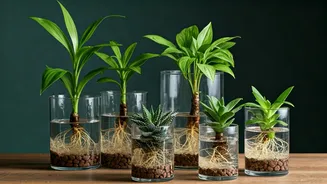
directly from water or a sterile growing medium. For the home decorator, this usually takes two popular forms: growing plant cuttings in a simple vase of water, or using a method called semi-hydroponics. This latter approach often involves lightweight expanded clay aggregate (LECA), which are little, porous terracotta balls that absorb water and release it to the roots as needed. The result is a cleaner, more controlled, and surprisingly stylish environment for your plants to thrive in.
Say Goodbye to Soil-Related Drama
The word “lazy” in the headline is really a stand-in for “smart and efficient.” A huge part of traditional houseplant maintenance is dealing with problems originating from soil. The most common complaint? Pests. Fungus gnats, for instance, lay their eggs in damp topsoil, creating an infuriating cycle of tiny bugs buzzing around your home. By eliminating soil, you eliminate their breeding ground entirely. There’s also the mess factor. Repotting plants can be a project that leaves your floor and hands covered in dirt. Soil-free systems are significantly cleaner, both in setup and daily life. You get all the green, leafy benefits with none of the dirt-under-your-fingernails downside.
The End of Watering Guesswork
Is the soil too wet? Too dry? For many aspiring plant parents, this constant guesswork is the number one cause of plant death. Soil-free methods transform watering from an art into a simple science. If your plant is in a clear glass vase, you can literally see the water level. There’s no mystery. In semi-hydroponic setups using LECA, plants are typically potted in a vessel with a water reservoir at the bottom. The clay balls wick moisture up to the roots as needed. You only need to top up the reservoir when it's low—often just once every week or two, depending on the plant and environment. This creates a stable, consistent moisture level that prevents the dreaded cycle of overwatering and underwatering that dooms so many soil-based plants.
Best Plants for a Soil-Free Start
While many plants can be adapted, some are practically born for a soil-free life. These species are famously resilient and propagate easily in water, making them perfect candidates for your first experiment. Start with these foolproof options:
- **Pothos:** The undisputed champion of easy-care plants. Its trailing vines look gorgeous in a simple vase, and it roots so readily you’ll feel like a professional botanist.
- **Philodendron:** Similar to pothos, heartleaf philodendrons are incredibly forgiving and thrive in water or LECA.
- **Snake Plant:** This architectural plant is known for being nearly indestructible. It can be propagated in water, though it's a slower process. Its tolerance for low moisture makes it a great fit for semi-hydroponics.
- **ZZ Plant:** Another low-maintenance superstar, the ZZ plant’s thick, rhizomatous roots adapt well to a soil-free environment.
- **Lucky Bamboo:** Often sold in water already, this plant is a natural for a soil-free display.
A Quick Reality Check on 'Lazy'
While soil-free is undoubtedly lower-maintenance, it isn't zero-maintenance. “Lazy” doesn’t mean you can completely forget about your plant. Water still needs to be managed. For plants living purely in water, you’ll need to change it every week or so to prevent algae and keep it oxygenated. For both water and LECA setups, you’ll eventually need to add a few drops of liquid hydroponic fertilizer, since the plants aren't getting nutrients from decaying organic matter in soil. You may also need to flush your LECA pots every few months to remove mineral buildup. However, these are predictable, scheduled tasks—a far cry from the daily, anxious prodding of potting soil.