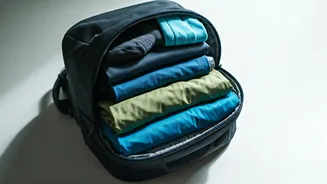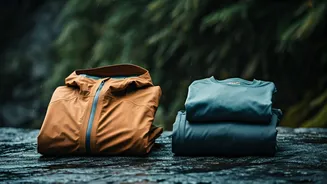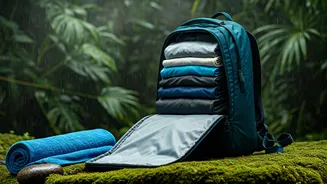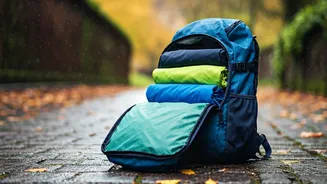




Why Your Favorite Cotton Tee Is a Trap
We all love the comfort of a soft cotton t-shirt. But on a trip to a place where rain is in the forecast—from the misty coasts of the Pacific Northwest to the cobblestone streets of London—cotton becomes your worst enemy. There’s a reason experienced
hikers have a saying: “cotton kills.” While that’s an extreme warning for backcountry survival, the principle applies to travel comfort, too.Cotton is a hydrophilic fiber, meaning it loves water. A cotton shirt can absorb up to 27 times its weight in water. When it gets wet, it clings to your skin, loses all its insulating properties, and creates a damp, persistent chill. Worse, it takes an eternity to dry. Hanging a wet cotton shirt in a humid hotel room can mean it’s still damp 24 hours later, leaving you with fewer wearable options and a musty-smelling suitcase. This single fabric choice can be the difference between shrugging off a shower and having your entire day derailed by discomfort.
The Magic of Modern Materials
Quick-dry clothing works on a simple principle: it uses hydrophobic (water-repelling) fibers. Instead of absorbing moisture like a sponge, these materials move it away from your skin to the fabric’s surface, where it can evaporate quickly. The two main players are synthetics and a specific type of wool.
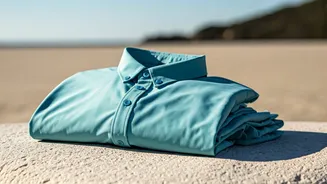
- **Synthetics (Polyester and Nylon):** These are the workhorses of the quick-dry world. They are fundamentally plastic-based, so the fibers themselves absorb very little water (polyester absorbs about 0.4% of its weight, nylon a bit more). They are durable, lightweight, and often blended with elastane or spandex for stretch and comfort. A lightweight polyester shirt can feel bone-dry within an hour of being soaked, sometimes even faster.
- **Merino Wool:** Don't let the word “wool” fool you into thinking of a scratchy winter sweater. Merino wool is a performance fabric superhero. Its fibers are incredibly fine, making it soft against the skin. While it can absorb more moisture than synthetics, it has a unique trick: it remains warm even when wet. It’s also naturally odor-resistant, meaning you can wear a merino shirt for days without it smelling, a massive bonus for minimalist packers.
Building Your Quick-Dry Wardrobe
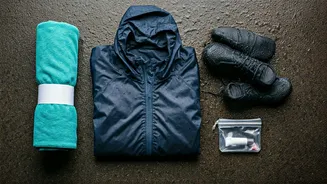
Upgrading your travel gear isn’t just about buying a high-tech rain jacket. A truly effective system works from the inside out. Think in layers, where each piece is designed to manage moisture.
- **Base Layers:** This is what’s next to your skin. Quick-dry T-shirts, long-sleeve shirts, and even underwear made from merino or polyester are the foundation. They wick sweat and rain spray away from your body.
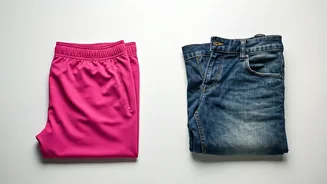
- **Pants and Shorts:** A pair of quick-dry travel pants is one of the best investments you can make. Caught in a storm while sightseeing? The water will bead off initially, and once you’re inside, they’ll dry on your body in under an hour. They are far more comfortable and versatile than jeans, which suffer from the same water-logging problem as cotton shirts.
- **Socks:** Wet socks are a recipe for blisters and misery. A few pairs of merino wool or synthetic-blend socks will keep your feet dramatically warmer and drier than cotton athletic socks, even inside waterproof boots.
What to Look For on the Label
When you’re shopping, the sheer number of options can be overwhelming. Cut through the noise by looking for a few key features and terms. First, check the material tag. If it’s 100% cotton, put it back. Look for polyester, nylon, or merino wool, or blends of these. For outerwear and pants, look for a “DWR” (Durable Water Repellent) finish. This is a chemical coating that makes water bead up and roll off the fabric’s surface. It’s not fully waterproof, but it’s your first line of defense in a light shower. Also, pay attention to construction. Flatlock seams prevent chafing, gusseted crotches in pants allow for better movement, and zippered pockets keep your valuables secure. A good piece of travel clothing isn't just about the fabric; it’s designed for the realities of being on the move.