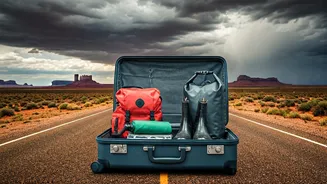



1. The 'Just in Case' Water and Food Supply
This is the absolute foundation of any serious car kit, but it’s non-negotiable during monsoon season. A single bottle of water isn't enough. The risk isn't just getting stranded in the heat; it's getting stranded for hours. A sudden flash flood can wash
out a road, or a multi-car pileup in a dust storm (a haboob) can shut down a highway completely. Plan for a long wait. Pack at least one gallon of water per person, per day you might be delayed. For food, think non-perishable, high-energy snacks that can withstand the brutal heat inside a car. Protein bars, jerky, nuts, and dried fruit are perfect. Tossing a few in your glove compartment is casual packing. Intentionally stocking a dedicated bag or cooler is monsoon-ready packing.
2. Your Visibility and Communication Kit
Monsoons attack visibility from two fronts: blinding rain and opaque walls of dust. Your car’s basic equipment might not be enough. First, ensure your windshield wipers are in excellent condition. Old, cracked wipers that just smear water are a liability. Beyond that, your kit needs a powerful, reliable flashlight with extra batteries—not just your phone's light, which drains a device you'll need for communication. A portable battery bank (fully charged) is essential for keeping your phone alive. Cell service can be spotty in the rural areas where you're most likely to get stuck, but having a charged phone means you can call for help the moment you get a signal or use offline maps to assess your location.
3. The 'Stuck in the Mud' Essentials
Flash floods don't just happen in major washes; they can turn a simple dirt shoulder into a sticky, impassable mud pit. If you have to pull over, you might find yourself stuck. A small, foldable shovel can be a lifesaver for digging out a buried tire. A tow strap is another crucial item, though it should only be used by someone who knows what they're doing. A pair of sturdy work gloves will protect your hands while you work. These items may seem like overkill until you’re the one spinning your wheels, watching the water rise, just a few feet from solid ground. Think of this as your self-rescue package.
4. First-Aid and Personal Comfort Items
A standard, pre-packaged first-aid kit is a great start. Make sure it's fully stocked and that you've added a few key extras relevant to the environment. Include extra adhesive bandages of various sizes, antiseptic wipes, pain relievers, and any personal medications you can't be without. Beyond emergencies, consider comfort. A long wait in a car during a storm can be miserable. Pack a spare blanket or emergency Mylar space blankets, which are compact and incredibly effective at retaining body heat if you're stuck overnight and the desert temperature plummets. A spare T-shirt, socks, and a small towel can also make a huge difference to your morale if you get soaked.
5. The Most Important Item: A Plan
The single most important thing to pack is intangible: a plan rooted in patience. Before you even leave, check the weather forecast and traffic reports from sources like the Arizona or New Mexico Departments of Transportation. Know your route, but also know alternate routes. Tell someone where you're going and when you expect to arrive. The most crucial part of the plan is what to do when you encounter a storm. In a dust storm, the official advice is "Pull Aside, Stay Alive." Pull your vehicle as far off the road as possible, turn off all your lights (so others don't follow you and crash into you), and wait for it to pass. In a flood, the mantra is even simpler: "Turn Around, Don't Drown." It takes shockingly little water to lift a car and sweep it away. Your plan must include the discipline to not take the risk. The destination can wait.