







Understanding the Zen Garden Philosophy
A Japanese rock garden, or karesansui, is not a garden in the traditional sense. It's a miniature, stylized landscape created with rocks, sand, and minimal (if any) plants. The goal isn't horticulture; it's to create a serene space that encourages contemplation
and meditation. The raked sand represents water, while larger rocks and smooth pebbles symbolize islands, mountains, or other natural features. The core principles are simplicity (kanso), naturalness (shizen), and asymmetry (fukinsei). By creating your own, you're not just making a decorative object—you're engaging in a mindful practice that calms the mind and centers the spirit.
Gathering Your Sustainable Materials
The beauty of a Zen garden lies in its elemental simplicity, making it a perfect project for sustainable design. Before you buy anything new, look for opportunities to upcycle. A shallow ceramic bowl, an old wooden tray, or a sturdy picture frame can all serve as a beautiful container. For the base, you'll need fine sand. Look for sand sold for play areas or decorative use. The most important choice is your pebbles. To honor the spirit of sustainability, avoid collecting stones from natural habitats like beaches or riverbeds, which can disrupt local ecosystems. Instead, purchase them from garden centers that can verify their sourcing, use recycled glass pebbles, or find them at creative reuse centers. The key is to be intentional with your choices, reflecting the mindful purpose of the garden itself.
The Art of Selecting and Placing Pebbles
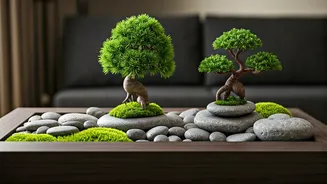
Smooth river pebbles are the heart of your design. They are the 'islands' in your sea of sand. When choosing your stones, focus on variety in size, shape, and even subtle color variations. You’ll want a few larger, more prominent 'mountain' stones and a cluster of smaller pebbles. Traditionally, rocks are arranged in odd-numbered groups—often three, five, or seven—to create a sense of natural asymmetry. Look for stones with one flat side, which will help them sit securely in the sand. Before placing them, hold each one in your hand. Feel its weight and texture. Arrange them in a way that feels balanced and pleasing to your eye. There is no 'wrong' way to do it; the arrangement should simply feel harmonious to you.
Assembling Your Miniature Landscape
With your materials gathered, it’s time to create. First, ensure your container is clean and dry. Pour a layer of sand about one to two inches deep, creating a level surface. Next, place your larger rocks. Gently press them into the sand until they feel stable and secure. This is your main focal point, so position them thoughtfully. After your 'mountains' are set, arrange your smaller river pebbles around them to create shorelines or archipelagos. Once your stones are in place, use a small rake—or even a fork or a simple wooden dowel—to create patterns in the sand. Straight lines can evoke a sense of stillness and order, while swirling, circular patterns can represent the ripples of water. The act of raking is a meditative practice in itself.
Tending Your Garden of Calm
Your indoor Zen garden is a living piece of art that evolves with you. It requires no watering, weeding, or sunlight, but it does benefit from gentle attention. Place it on a desk, a coffee table, or a quiet shelf where you can see it often. Keep your small rake nearby. When you feel stressed or need a moment to clear your head, spend a few minutes re-raking the sand. You can create new patterns or simply trace over the old ones. Rearrange the pebbles when you feel a need for change. This simple, repetitive action helps focus the mind, release tension, and reconnect you with a sense of calm. It's a five-minute mental reset button available anytime you need it.