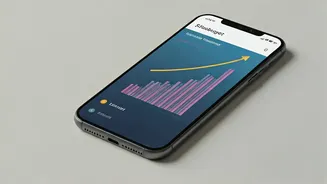









Beyond Spreadsheets and Basic Alerts
For years, digital budgeting has meant one of two things: meticulously entering every expense into an app like YNAB, or passively receiving alerts from a service like Mint. While useful, these tools often feel static and require significant user discipline.
Conversational AI budgeting apps represent a fundamental shift in this dynamic. Instead of you working for the app, the app works more like a personal financial assistant you can chat with. Imagine texting a friend to ask, "How much did I spend on takeout last month?" or "Can I afford to buy these concert tickets?" and getting an instant, intelligent answer. That’s the core promise: to make managing your finances as simple and intuitive as having a conversation.
How It Actually Works
So, what’s the technology behind this financial chatter? These apps typically use a secure, third-party service like Plaid to link directly to your bank accounts and credit cards. Once connected, the app pulls in your transaction data in real-time. This is where the “AI” part comes in. The app uses Natural Language Processing (NLP) to understand your typed questions and commands. It automatically categorizes your spending—groceries, gas, entertainment, rent—and learns your habits over time. The “conversational” interface is often designed to mimic a chatbot, complete with friendly messages, emojis, and proactive nudges. It might send you a message saying, "You've spent 80% of your coffee budget for the month!" or even offer to automatically move small amounts of money into a savings account for you.
The Promise of an Effortless Experience
The main appeal of these apps is the removal of friction. The word "effortless" in the headline is the goal, achieved through several key features. First, automation is king. By tracking and categorizing spending automatically, the app eliminates the tedious manual data entry that causes so many people to abandon their budgets. Second, the query-based system provides instant gratification. You don't have to hunt through statements or filter spreadsheets; you just ask a question in plain English. Finally, the tone is often designed to be encouraging and non-judgmental. Instead of just showing you red numbers, a conversational AI might frame an overspending alert as a helpful tip, reducing the anxiety and shame often associated with financial management.
The Hidden Costs and Concerns
While the convenience is compelling, it doesn't come without trade-offs. The most significant concern for many users is privacy and security. Giving a third-party app read-only access to your entire financial history is a major decision. While services like Plaid use robust encryption and security protocols, the risk of a data breach, however small, always exists. It's crucial to review an app's privacy policy to understand what it does with your data. Another potential pitfall is over-simplification. An AI's advice is only as good as its algorithm. It might not understand the nuance of your financial life or your long-term goals. It can tell you if you can 'afford' a purchase based on your current balance, but it can't offer the holistic advice a human financial planner could.
Is a Robot Right for Your Wallet?
So, should you hand your financial keys over to a chatbot? The answer depends on your personality and your goals. If you're someone who is allergic to spreadsheets, has struggled to stick with traditional budgeting methods, and is comfortable with modern app permissions, a conversational AI could be a fantastic tool to build awareness of your spending habits. It's particularly popular among younger, tech-savvy users who are native to messaging interfaces. However, if you are highly security-conscious, prefer to maintain manual control over your financial data, or are managing complex financial situations involving investments and debt, you may find these apps too simplistic or too invasive. They are best viewed as a smart, accessible entry point into better financial habits, not a comprehensive replacement for detailed financial planning.