





The Aggressive Towel Turban
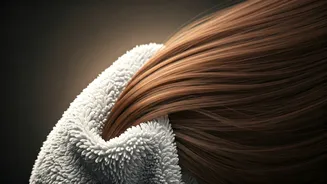
The classic movie scene of a character emerging from the shower with a perfectly twisted towel on their head is iconic, but it’s terrible for your hair. Vigorously rubbing your hair with a coarse cotton towel creates friction that lifts and roughens the hair's
cuticle, the protective outer layer. This leads to frizz, dullness, and breakage. That tight turban twist can also pull on your delicate hairline, causing stress and damage to the follicles over time.Instead, gently squeeze excess water out in the shower. Then, use a soft microfiber towel or an old, clean cotton t-shirt to blot and scrunch your hair. This method absorbs water without the damaging friction, keeping your cuticles smooth and happy.
Brushing From the Roots Down
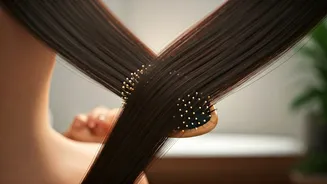
When your hair is wet and tangled, grabbing a brush and ripping it from the scalp downwards is one of the most destructive things you can do. Wet hair has more elasticity and is much weaker than dry hair, making it highly susceptible to snapping. Brushing from the roots forces all the knots into one giant, unmanageable tangle at the bottom, which you then have to tear through, breaking countless strands in the process.To detangle safely, start at the ends. Hold a section of your hair and gently work through the tangles at the bottom first. Once the ends are clear, move a few inches up and repeat, gradually working your way to the roots. A wide-tooth comb or a brush specifically designed for wet hair is your best tool for this job.
Applying High Heat Immediately
That sizzling sound when your blow-dryer or flat iron hits your sopping-wet hair isn't a sign of efficiency—it's the sound of your hair boiling. Applying high heat to drenched hair instantly turns the water inside the hair shaft into steam, causing it to expand violently and create bubbles within the hair fiber. This damages the hair from the inside out, leading to weakness, brittleness, and a rough, porous texture.Always let your hair air-dry or towel-blot until it's at least 60-70% dry before introducing any heat. When you do use a blow-dryer, start on a low or medium heat setting and keep it moving constantly to avoid concentrating heat on one spot for too long.
Skipping the Heat Protectant
You wouldn't grab a hot pan from the oven without an oven mitt, so why would you let a 400-degree tool touch your bare hair? Heat protectant sprays are non-negotiable. They work by forming a protective barrier over the hair shaft, which helps to distribute heat more evenly and slow down heat conduction. This minimizes the direct damage from blow-dryers, curling wands, and flat irons. Many formulas also contain moisturizing ingredients like silicones or natural oils to help seal the cuticle and add shine.Think of it as essential insurance for your hair. Mist it evenly through damp hair before blow-drying or on dry hair before using hot tools. It’s a simple, two-second step that prevents irreversible damage.
Tying It Up When Wet
It can be tempting to throw your wet hair into a tight ponytail or bun to get it out of your face, but this habit puts your hair under extreme tension when it's most vulnerable. As mentioned, wet hair stretches more easily than dry hair. When you secure it tightly with an elastic, you're stretching it to its breaking point. As your hair dries, it shrinks back to its normal state, but the tension from the hair tie can cause it to snap right at the band. This is a common cause of those frustrating short, flyaway hairs around the crown and face.If you must put your hair up while it’s damp, opt for a loose braid or use a gentle accessory like a silk scrunchie or a claw clip that won’t create a single point of intense pressure.