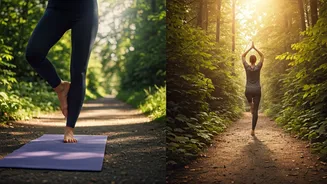







More Than Just a Walk
At its core, this workout is a form of moving meditation, often called 'mindful walking' or 'breathwalking.' It's not about speed, distance, or burning the maximum number of calories. Instead, the entire focus is on synchronization: aligning the rhythm
of your breath with the rhythm of your stride. While a regular walk might have you distracted by a podcast, a phone call, or the day’s to-do list, this practice demands your full attention. It transforms a mundane activity into a deliberate act of mindfulness. You’re not just moving your body through space; you are consciously inhabiting it, paying attention to the sensation of your feet on the ground, the air filling your lungs, and the simple, repetitive motion that calms the nervous system.
The Science of Simplicity
The magic of this practice lies in its dual benefits for mind and body. Physiologically, rhythmic, deep breathing—also known as diaphragmatic breathing—has been shown to activate the parasympathetic nervous system. This is the body's 'rest and digest' mode, which helps lower heart rate, reduce blood pressure, and decrease levels of the stress hormone cortisol. When you combine this with the low-impact cardiovascular exercise of walking, you get a powerful tool for managing stress and anxiety. Mentally, the practice is a workout for your brain. By focusing on the fixed pattern of breath and steps, you train your attention, gently guiding it back whenever it wanders. This act of sustained focus can improve concentration and foster a sense of inner calm and clarity that lasts long after your walk is over. It’s a simple, accessible way to combat the mental fatigue of our always-on culture.
How to Get Started: A Simple Guide
Getting started is incredibly simple and requires no special equipment. Here's a basic framework for your first mindful walk: 1. **Find Your Space:** Choose a quiet, safe place where you can walk without too many interruptions or obstacles. A park path, a quiet neighborhood block, or even a backyard will do. Aim for at least 10-15 minutes. 2. **Check Your Posture:** Stand tall but relaxed. Let your shoulders drop away from your ears, keep your gaze soft and directed a few feet in front of you, and let your arms swing naturally at your sides. 3. **Find Your Rhythm:** Begin walking at a natural, comfortable pace. Start by simply noticing your breath without trying to change it. Then, begin to create a pattern. A common starting point is the 'four-four' count: inhale through your nose for four steps, then exhale through your nose or mouth for four steps. 4. **Stay with the Sensation:** Your mind will inevitably wander. That’s completely normal. The goal isn’t to have an empty mind, but to notice when you’ve been distracted and gently bring your focus back to the sensation of your breath and the feeling of your feet striking the ground. Each time you guide your attention back, you are strengthening your mindfulness 'muscle.'
Variations and Going Further
Once you're comfortable with the basic four-four pattern, you can explore other rhythms. The practice of 'Breathwalk,' popularized by Yogi Bhajan, incorporates several distinct patterns for different effects. For example, a more energizing walk might use shorter, segmented inhales and exhales over a set number of steps. You might try a 'stair-step' breath: inhale in four distinct 'sniffs' over four steps, then exhale in one smooth breath over four steps. You can also experiment with different counts based on your lung capacity and pace, like inhaling for three steps and exhaling for five. The key is to find a rhythm that feels steady and sustainable, allowing you to drop into a state of relaxed focus without feeling strained.