

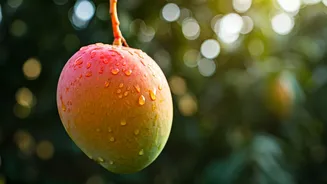
The Royal Obsession
The story of Lucknow’s mango supremacy begins with royalty. In the 18th and 19th centuries, the region was ruled by the Nawabs of Awadh, famously extravagant patrons of art, cuisine, and culture. For them, cultivating the perfect mango was a matter of prestige
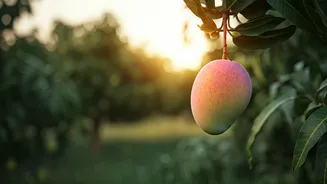
and passion. They sponsored vast orchards, known as 'baughs,' and encouraged horticulturalists to develop new, ever-more-delectable varieties through grafting. These weren't just farms; they were living laboratories dedicated to perfecting the 'king of fruits.' The Nawabs hosted lavish 'mango parties,' where guests would sample hundreds of varieties, each with its own unique flavor profile, from intensely sweet to subtly spicy. This royal obsession laid the groundwork for a culture that valued mangoes not as a crop, but as a treasure.
A Gift of the Land
Royalty can only nurture what nature provides, and the land around Lucknow was uniquely blessed. The city sits in the heart of the Gangetic plain, a fertile belt of alluvial soil deposited by the Ganges River over millennia. This nutrient-rich soil, combined with a specific microclimate—searingly hot summers followed by monsoon rains—creates the perfect terroir for mango cultivation. Just northwest of Lucknow lies the Malihabad-Kakori belt, a stretch of land so singularly suited for mangoes that it has been granted a Geographical Indication (GI) tag, similar to Champagne in France or Parmesan in Italy. This designation recognizes that the unique combination of soil, water, and weather here produces mangoes with a flavor and aroma that cannot be replicated anywhere else in the world.
The Legend of the Dasheri
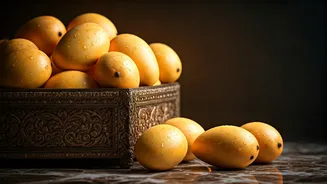
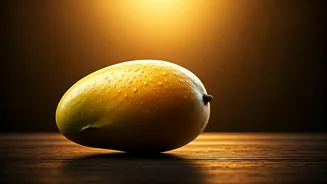
If Lucknow is the capital, the Dasheri mango is its crown jewel. The origin of this beloved variety is a story steeped in local legend. It’s said that all Dasheri mangoes trace their lineage back to a single 200-year-old 'mother tree' in the village of Dasheri, near Malihabad. This tree’s fruit was so exceptionally sweet, fiberless, and aromatic that it became the talk of the region. Cuttings from this legendary tree were grafted onto other saplings, spreading its superior genetics across the mango belt. Today, the Dasheri is one of India's most famous and exported mangoes, celebrated for its golden skin, vibrant orange pulp, and an intense, honeyed sweetness. The 'mother tree,' now a protected landmark, still stands as a living monument to the region’s horticultural genius.
A Living, Breathing Tradition
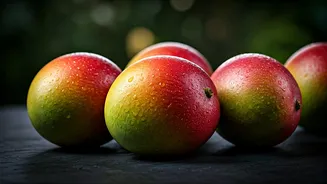
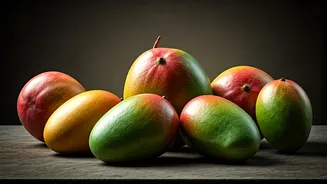
While the era of the Nawabs has passed, Lucknow's mango culture is more vibrant than ever. The traditions they started are carried on by generations of orchardists in Malihabad, many of whom are direct descendants of the gardeners who served the royal courts. During the mango season, from May to August, the city’s markets overflow with dozens of varieties beyond the famous Dasheri—from the delicately flavored Chausa to the uniquely shaped Langra. The 'mango parties' of old have evolved into family picnics in orchards and an informal but intense social ritual of gifting boxes of the season's best fruit. For the people of Lucknow, the arrival of the mangoes is a celebration of identity, a taste of shared history, and a sweet, sticky reminder of their city’s unique place in the world.