








The Quiet Morning Gathering
Before the city fully wakes, a subtle but growing movement is underway in its green spaces. From New York’s Central Park to San Francisco’s Golden Gate Park, individuals and small groups are participating in a simple, meditative practice: walking barefoot
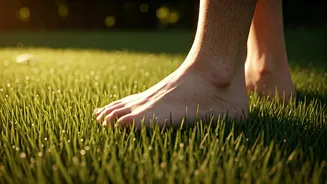
on the earth. They arrive with the morning mist, kick off their sneakers and sandals, and step onto the cool, damp grass. There’s no equipment, no instructor, and usually, very little conversation. The participants are diverse—young professionals in workout gear, older residents seeking a moment of peace, wellness enthusiasts in yoga pants. Their shared activity is a quiet, deliberate act of connecting with the ground beneath their feet, a stark contrast to the concrete, traffic, and digital noise that typically defines urban life.
It’s Called ‘Grounding’
This practice isn't just a quirky new fad; it has a name and a dedicated following. Known as “grounding” or “earthing,” the core idea is to make direct skin contact with the surface of the Earth. Proponents believe that the planet has a natural, subtle electrical charge. By walking barefoot on grass, dirt, or sand, they claim we can absorb the Earth's free electrons, which in turn helps stabilize our own physiology and brings the body back to a state of equilibrium. While modern footwear, made with synthetic soles, insulates us from this direct connection, grounding seeks to restore it. In its simplest form, it’s about taking off your shoes and standing on the ground for 15 to 30 minutes a day. For many, the park has become the most accessible place to do it.
The Science and the Skepticism
The wellness community has embraced grounding, with advocates citing a range of potential benefits, including reduced inflammation, better sleep, decreased pain, and lower stress levels. A handful of small studies, often published in alternative medicine journals, have explored these claims. Some research suggests that connecting with the Earth’s electric potential could have a positive influence on human health, particularly by regulating the nervous system and reducing cortisol, the body’s primary stress hormone. However, it's crucial to note that the body of evidence is still small and not widely accepted by the mainstream medical community. Many doctors and scientists remain skeptical, attributing the perceived benefits to other factors, such as being outdoors, getting gentle exercise, and the powerful placebo effect of engaging in a mindful, relaxing ritual.
An Antidote to Modern Disconnection
Whether the benefits come from electrons or simple mindfulness, the grounding trend speaks to a deeper cultural yearning. We live increasingly indoor, screen-saturated lives, physically disconnected from the natural world. Our feet are almost always encased in rubber or leather, and our paths are paved with asphalt. The barefoot walking ritual is a direct, tactile rebellion against that isolation. It’s a free, accessible, and radically simple way to reclaim a moment of sensory awareness. In a world of complex bio-hacking, expensive supplements, and high-tech wellness gadgets, the appeal of something so primal and cost-free is undeniable. It taps into a desire to slow down, unplug, and feel something real—the cool dampness of the earth, the tickle of a blade of grass—in a way that scrolling through a phone never can.