



An Island Shaped by Water
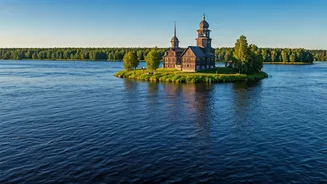
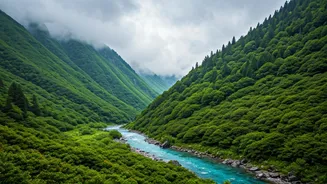
Deep in northeastern India, nestled within the mighty Brahmaputra River, lies Majuli Island. It’s not just any island; it's one of the world's largest river islands and a vibrant hub of Assamese Neo-Vaishnavite culture. But Majuli lives a precarious existence.
Each year, the monsoon-swelled Brahmaputra consumes parts of its shoreline, a slow-motion drama of erosion that has shrunk the island by more than half over the last century. For the communities here, particularly the Mising people, life is defined by the river’s rhythm. This constant dance with water—both life-giving and destructive—has given rise to a form of architecture that is ingenious in its simplicity and profound in its resilience.
Architecture Born From Necessity
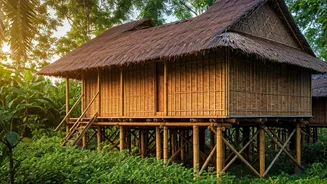
The traditional homes on Majuli, known as *chang ghar*, are a direct response to the environment. Built on tall stilts, they appear to float several feet above the ground. During the dry season, the space below serves as a shaded workshop, a pen for livestock, or a cool place to weave on a loom. But when the monsoons arrive and the river swells, inundating the low-lying fields, the purpose of the stilts becomes dramatically clear. The elevated platform keeps the family, their possessions, and their food stores safe and dry. The entire structure is a masterclass in vernacular design, where local knowledge, passed down through generations, has created a perfect solution for a recurring problem. These aren’t just houses; they are life rafts permanently anchored to the land.
The Sustainable Genius of Bamboo
The secret to the *chang ghar* is its primary material: bamboo. In a world searching for sustainable building materials, bamboo has long been the answer in Majuli. It’s a type of grass, not a tree, and it grows incredibly fast—some species can grow a few feet in a single day. This makes it an endlessly renewable resource. It's also remarkably strong and flexible, capable of withstanding the region's occasional seismic tremors and strong winds. The entire house, from the structural stilts and beams to the woven walls and floor mats, is crafted from different types of local bamboo. The roof is typically thatched with palm leaves or dried grasses. When a house reaches the end of its life, or if a family needs to relocate due to river erosion, the structure can be easily dismantled and its materials reused or allowed to biodegrade, leaving almost no trace.
More Than Just a House
Staying in or near one of these homes reveals that they are the heart of the community's social and economic life. The open-plan layout, often a single long hall, encourages communal living. A central hearth is used for cooking, providing warmth, and keeping insects at bay with its smoke. The home is where intricate textiles are woven, where rice is processed, and where stories are shared. This integration of life and work, family and community, is built into the very structure of the home. It reflects a philosophy of living *with* nature, not against it. There is no attempt to build impenetrable fortresses against the floods; instead, there is an elegant, flexible acceptance of the water's power, a design choice that embodies respect for the environment.
A Blueprint for Modern Living?
For travelers seeking more than just a picturesque vacation, Majuli offers a profound experience. Several communities have opened their doors to visitors, offering stays in traditional bamboo cottages that allow for genuine cultural immersion. But the island’s significance extends far beyond eco-tourism. In an era of climate change, rising sea levels, and a desperate need for sustainable living solutions, the bamboo houses of Majuli are not relics of the past. They are a working blueprint. They demonstrate how local, natural materials and generational knowledge can create housing that is affordable, resilient, and has a minimal ecological footprint. They challenge the modern construction paradigm of concrete and steel, proving that some of the most advanced ideas are the ones that have worked for centuries.