






Leaving the Colonial Capital
The journey begins in Panjim (or Panaji), Goa’s capital. During the monsoon, from June to September, the city sheds its tourist bustle for a more contemplative charm. The rain washes the cobblestone streets of the old Latin Quarter, Fontainhas, making
the vibrant yellows, blues, and reds of the Portuguese-era houses seem to glow. Instead of beach shacks, you’ll find cozy cafes serving hot chai. This is your starting point: a civilized, rain-soaked pocket of European history in India. The air is thick with the smell of wet earth and petrichor as you head east, leaving the coastal plains behind. The smooth roads quickly give way to a more rural landscape, where the journey’s true character begins to emerge.
Through the Green Interior
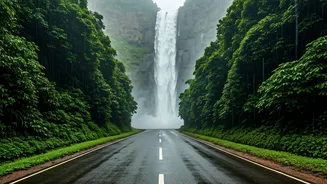
As you move inland, the Goa of postcards disappears. The landscape transforms into a rolling tapestry of emerald-green paddy fields, dotted with small, sleepy villages. This is the state’s agricultural heartland. The rain is a constant companion, sometimes a gentle drizzle, other times a torrential downpour that forces you to pull over and simply watch the world get drenched. This route takes you past several of Goa’s famed spice plantations, such as the Sahakari Spice Farm. A quick detour offers a sensory explosion: the sharp scent of cloves, the woody aroma of cinnamon, and the fresh bite of peppercorns growing on the vine. This part of the drive isn’t about speed; it’s about immersion. You’re traveling deeper into the Western Ghats, a mountain range recognized as a UNESCO World Heritage Site for its incredible biodiversity.
Entering Mollem National Park
The final leg of the drive takes you toward the town of Kulem (also spelled Collem), the gateway to your destination. Here, you enter the Bhagwan Mahaveer Sanctuary and Mollem National Park. The change is immediate and dramatic. The air cools, the road narrows, and a dense canopy of trees closes in overhead. The sounds of civilization are replaced by a chorus of insects, birds, and the rustle of unseen creatures in the undergrowth. This is where the “wild” in the route truly asserts itself. The forest is ancient, thick, and alive. Monkeys chatter from branches, and the sheer density of the vegetation makes you feel like you’ve entered another world. Kulem is the end of the line for most vehicles. From here, the adventure to the falls begins on foot or by a designated 4x4 jeep (when services are running).
The Trek to the 'Sea of Milk'
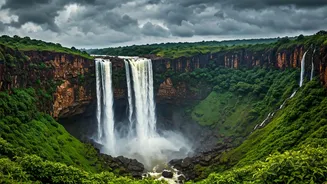
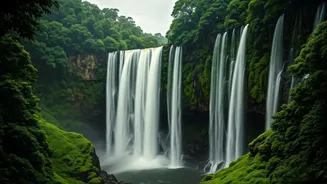
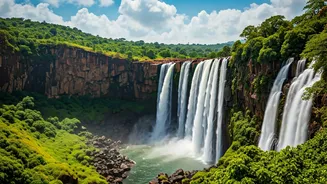
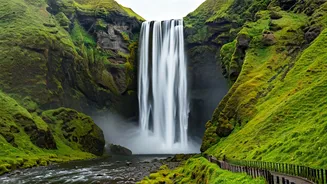
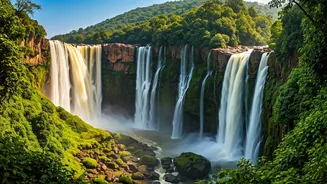
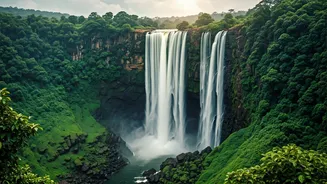
Dudhsagar, meaning “Sea of Milk,” is a four-tiered waterfall that becomes an absolute spectacle during the monsoon. The sheer volume of water cascading over 1,000 feet down the mountainside is staggering. During the peak rainy season, the jeep track is often closed due to overflowing streams, making a trek the primary way to reach the falls. This trek, often following the railway line that famously crosses in front of the waterfall, is the climax of the wild journey. You’ll navigate muddy paths, cross small streams, and walk through tunnels, with the roar of the falls growing louder with every step. When you finally arrive, the sight is breathtaking. A colossal wall of white water thunders into a misty, churning pool below. The spray soaks everything, and the power is palpable. It’s a raw, untamed display of nature that feels a world away from the calm beaches Goa is famous for.
Planning Your Monsoon Trip
The drive from Panjim to Kulem is about 45 miles (72 km) and takes around two hours without stops, but plan for at least half a day to enjoy the scenery. Renting a scooter offers freedom, but a car with a driver is a safer bet in the heavy rains. Wear sturdy, waterproof footwear and a reliable rain jacket. The trek to the falls is moderately difficult and requires a decent level of fitness, especially in wet conditions. It’s wise to hire a local guide in Kulem. While the falls are the destination, the real magic of this route is the journey itself—a gradual immersion into the wild, green soul of Goa that only reveals itself to those willing to embrace the rain.