





Check Your 'Big Three': Wipers, Tires, and Lights
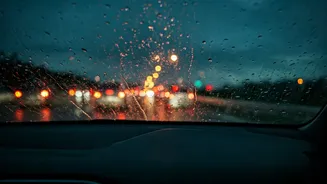
Before you even think about the snacks, do a quick but crucial vehicle check. First, your windshield wipers. Are they clearing water effectively or just smearing it? Brittle, cracked, or ineffective blades are a major hazard. Replacements are inexpensive
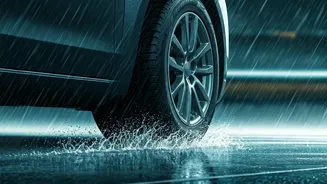
and easy to install. Next, your tires. They are your only connection to the road, and their ability to channel water is paramount. Use a penny to check your tread: if you can see all of Lincoln's head, your tires are dangerously worn and need replacing. Also, ensure they're inflated to the vehicle manufacturer’s recommended pressure (check the sticker inside your driver-side door jamb). Finally, test all your lights—headlights, taillights, and turn signals. In many states, headlights are required by law whenever wipers are in use, as they help other drivers see you, not just help you see the road.
Master the Art of Anti-Hydroplaning
Hydroplaning is the scariest part of driving in the rain. It happens when a layer of water builds between your tires and the road surface, causing a loss of traction and control. It can feel like you're suddenly floating or steering on ice. The best defense is prevention. First, slow down. The risk of hydroplaning increases dramatically with speed. Second, avoid puddles and standing water where possible. If you do start to hydroplane, the key is not to panic. Take your foot off the accelerator immediately and steer straight ahead. Do not slam on the brakes or make sharp turns, as this can send you into a spin. Once you feel the tires reconnect with the road surface, you can gently brake or steer as needed.
Pack a Rain-Specific Emergency Kit
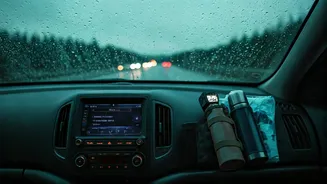
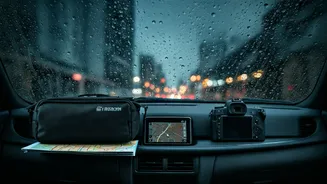
Your standard road trip emergency kit is a great start, but wet weather calls for a few specific additions. Toss in an extra-absorbent towel or two for wiping down foggy interior windows or drying off after a dash through a downpour. A change of socks and a warm blanket stored in a waterproof bag can be a massive morale booster if you get soaked. Consider a waterproof poncho or a sturdy rain jacket—far more effective than a small umbrella if you have to change a tire. Finally, pack a couple of high-visibility items, like a reflective vest or emergency flares, to ensure other drivers can see you clearly if you're stopped on the side of the road in low-light, rainy conditions.
Adjust Your Driving, Not Just the Playlist
Driving on wet pavement requires a different mindset. The most important rule, according to the National Highway Traffic Safety Administration (NHTSA), is to increase your following distance. It takes longer to stop on wet roads, so give the car in front of you at least five to six seconds of space, rather than the usual two to three. Avoid using cruise control; it can prevent you from sensing a loss of traction and may even cause your car to accelerate during a hydroplane. Be gentle with your inputs—accelerate smoothly, brake early, and take turns more slowly than you would in the dry. Watch for the oil slick rainbow that often appears on pavement at the beginning of a storm, as this indicates an especially slippery surface.
Know When to Call It
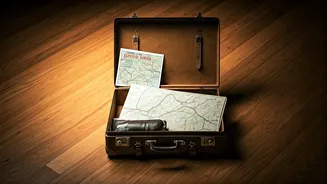
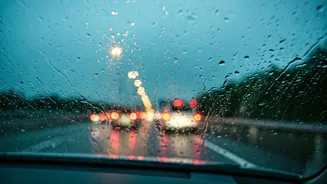
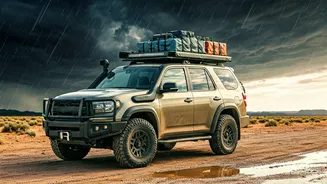
Sometimes, the most important preparation is knowing your limits. Before you leave, check the weather forecast along your entire route. A light drizzle is one thing; a severe thunderstorm with flash flood warnings is another. If the rain becomes so heavy that your wipers can't keep up or you can't see the edges of the road or other vehicles, it's time to pull over. Find a safe spot like a rest area or a well-lit parking lot, far from the flow of traffic. Do not simply stop in a travel lane or on the shoulder if you can avoid it. Turn on your hazard lights, wait for the worst of the storm to pass, and remember that arriving late is infinitely better than not arriving at all.