



The Ultimate Understated Brag
Let's be honest: in today’s world, conscious choices carry a certain cachet. We've seen it with reusable water bottles, tote bags, and thrift store finds. Now, the humble act of composting is stepping into the spotlight. Why? Because it’s an active, tangible
solution to a massive problem. Roughly a third of all food produced in the United States goes uneaten, with much of it ending up in landfills. By composting, you're not just throwing things away; you're actively diverting waste and participating in a circular process. It’s a move that says, 'I’m paying attention, and I’m doing something about it.' Unlike more expensive eco-gestures, like installing solar panels or buying an EV, composting is radically accessible. It's a flex that’s less about money and more about mindset—a quiet declaration of resourcefulness and responsibility.
What Really Happens to Your Banana Peel
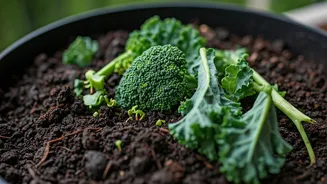
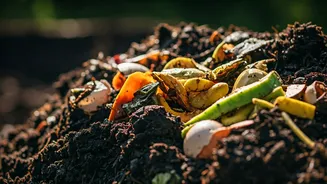
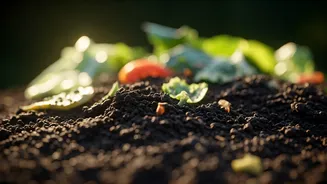
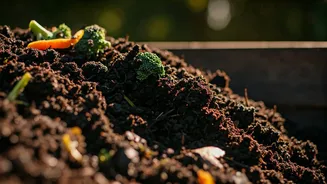
When you toss a banana peel or leftover salad into the regular trash, it gets sealed in a plastic bag and trucked to a landfill. Buried under tons of other garbage without oxygen, that organic matter can’t decompose properly. Instead, it undergoes anaerobic decomposition, releasing methane—a greenhouse gas over 25 times more potent than carbon dioxide at trapping heat in the atmosphere. The U.S. Environmental Protection Agency identifies landfills as one of the largest sources of human-related methane emissions. Composting flips the script. In a compost pile or bin, organic matter breaks down aerobically (with oxygen), thanks to a bustling ecosystem of microbes, worms, and fungi. This process not only avoids methane production but also creates a nutrient-rich soil amendment that gardeners affectionately call 'black gold.' You’re not just stopping a bad thing from happening; you’re creating something incredibly valuable from what was once considered trash.
Pick Your Player: Low-Cost Composting Setups
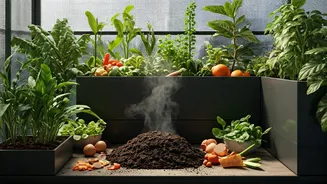
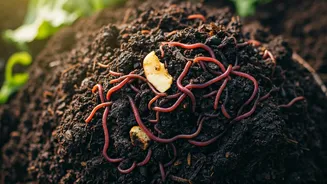
The beauty of composting is its scalability. You don't need a sprawling estate; you just need to match the method to your living situation. For homeowners with a bit of yard space, a simple pile or a DIY bin made from old pallets or chicken wire is practically free. You can also buy a rotating tumbler for around $100–$200, which speeds up the process and keeps critters out. For apartment dwellers or those with no yard, vermicomposting (a worm bin) is a game-changer. It’s odorless when managed correctly, can be stored under a sink or on a balcony, and the worms do all the heavy lifting, producing some of the richest compost available. Many cities are also stepping up with municipal composting programs. These range from curbside pickup services, similar to your regular recycling, to convenient community drop-off points at farmers' markets or local gardens. A quick search for your city's name plus 'compost program' is all it takes to find out your options.
Composting 101: The No-Fuss Rules
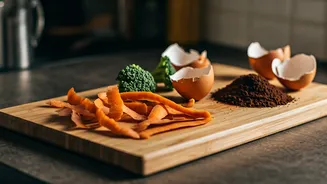
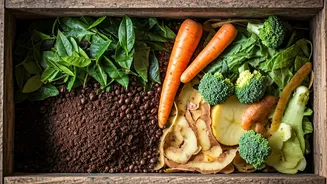
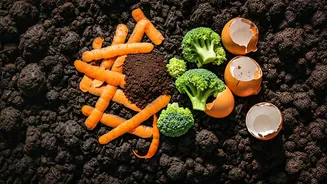
The science of composting can seem intimidating, but the daily practice is simple. Just remember the 'Greens and Browns' rule. You need a balance of both for a healthy, odor-free pile. 'Greens' are nitrogen-rich materials that are typically wet, like fruit and vegetable scraps, coffee grounds, and fresh grass clippings. 'Browns' are carbon-rich materials that are typically dry, like dead leaves, shredded cardboard (not the glossy kind), newspaper, and wood chips. Aim for a ratio of roughly two to three parts 'browns' to one part 'greens.' What should you keep out? Generally, avoid meat, fish, dairy products, and oily foods. These can attract pests and create foul odors as they decompose. Beyond that, just layer your greens and browns, keep the pile about as damp as a wrung-out sponge, and turn it occasionally to introduce air. Nature will handle the rest.