




1. Your Tires: The First Line of Defense
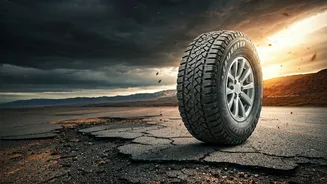
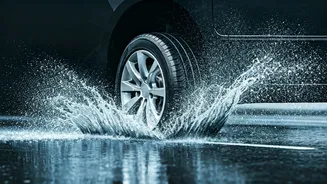
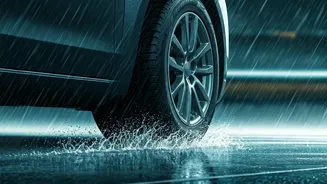
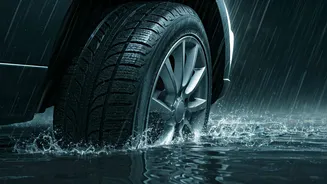
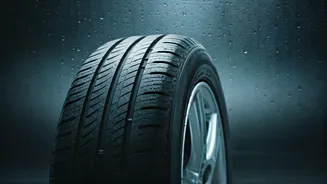
In a monsoon, the road is a river. Your tires are the only thing connecting your vehicle to the asphalt, and their ability to channel water away is critical. This is where tread depth comes in. Worn-out tires can’t disperse water effectively, leading
to hydroplaning—where your car essentially floats on a thin layer of water, causing a complete loss of steering and braking control. You can check your tread depth with a penny. Insert it into the tread groove with Lincoln's head upside down. If you can see the top of his head, your tires are dangerously worn and need replacing. Also, check your tire pressure. Both under-inflated and over-inflated tires can reduce traction and make handling unpredictable in a storm.
2. Windshield Wipers: Your Window to the World
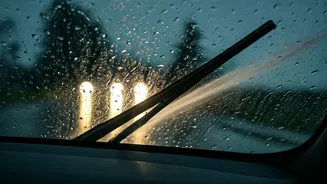
Monsoon rains aren't gentle showers; they're blinding sheets of water. Your ability to see is paramount. Old, cracked, or brittle wiper blades won't clear the windshield effectively. Instead, they'll smear the water, creating a blurry mess that’s even harder to see through. Before the season starts, inspect your blades for any signs of wear and tear. If they leave streaks or make chattering noises, replace them. It’s an inexpensive fix that can make the difference between seeing a hazard and not. While you’re at it, top off your windshield washer fluid. You'll need it to clear away the mud and debris kicked up by the storm.
3. Lights: Be Seen, Be Safe
Heavy rain and dark storm clouds drastically reduce visibility for everyone on the road. Your headlights and taillights aren't just for you to see; they're for other drivers to see you. Walk around your vehicle and have someone help you check that your headlights (both low and high beams), taillights, brake lights, and turn signals are all functioning correctly. A dim or burned-out bulb can make your car nearly invisible to a driver approaching from behind or the side. Clean the plastic covers over your lights, as road grime and oxidation can significantly dim their output.
4. Brakes: The Power to Stop
Wet roads mean longer stopping distances. It’s simple physics. This makes the condition of your braking system more important than ever. If your brakes have been feeling spongy, making grinding noises, or pulling to one side, get them inspected by a professional immediately. A mechanic can check your brake pads, rotors, and fluid levels to ensure they have the stopping power you’ll need when a car ahead of you suddenly brakes or a flooded wash appears out of nowhere. Don't put this one off; your ability to stop reliably is non-negotiable.
5. Battery: The Heart of Your Vehicle
Your car's battery works harder in extreme weather. High heat can degrade a battery's life, and when a monsoon hits, you're asking it to power your lights, wipers, and A/C all at once. A weak battery might work fine on a clear day but could fail you at the worst possible moment—like when you're stalled in traffic during a downpour. Many auto parts stores offer free battery testing. It only takes a few minutes and will tell you if your battery is holding a proper charge. If it's more than three years old or showing signs of weakness, consider replacing it before you get stranded.
6. Defroster and A/C: Clearing the Fog
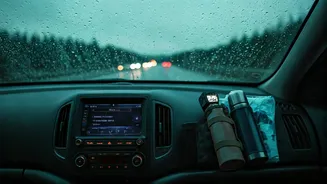
The danger isn't always outside your car. The high humidity of a monsoon storm can cause your windows to fog up instantly, completely obscuring your view. Your car's air conditioning and defrost systems are crucial for managing this. The A/C removes moisture from the cabin air, while the defroster directs dry air onto the windshield. Test them both. Turn your A/C on full blast and make sure it’s blowing cold. Then, switch to your defrost settings (front and rear) to ensure they are working and can clear condensation quickly. A fogged-up interior is just as dangerous as a rain-swept exterior.
7. Your Emergency Kit: The Final Precaution
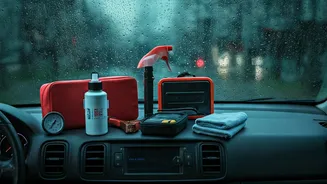
Even with a perfectly maintained vehicle, things can go wrong. Flash floods can close roads, or you might get a flat tire in a remote area. A well-stocked emergency kit is your safety net. It should include essentials like a flashlight with extra batteries, a first-aid kit, jumper cables, a phone charger or power bank, drinking water, and non-perishable snacks. A blanket and a rain poncho are also wise additions. The goal is to be self-sufficient for a few hours if you become stranded, waiting for the storm to pass or for help to arrive.