





The End of the One-Size-Fits-All Diet
Remember the food pyramid? For many Americans, that iconic chart was our first and last formal nutrition lesson. It presented a single, universal path to health: a foundation of bread and pasta, a few servings of fruits and vegetables, and a tiny capstone
of fats and oils. This top-down, prescriptive model dominated public health for years. The problem, as we now know, is that it doesn’t work for everyone. The rise of diet culture in the 90s and 2000s only amplified the noise, creating warring tribes of Atkins, Paleo, vegan, and keto followers, each convinced they held the one true key to wellness. This era was defined by restriction, moral judgment (“good” foods vs. “bad” foods), and a cycle of guilt and compliance. The result wasn’t a healthier nation, but a population exhausted by the endless, preachy rules and the feeling of personal failure when a trendy diet didn't deliver.
Your Body's Personal User Manual
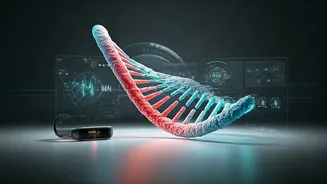
The new frontier of nutrition is turning this old model on its head. Instead of handing you a rulebook, it aims to give you a user manual for your own biology. This shift is powered by accessible technology that was once confined to research labs. The most prominent examples are Continuous Glucose Monitors (CGMs). These small wearable sensors, often attached to the arm, track your blood sugar levels in real time. Suddenly, you can see exactly how your body responds to a banana versus a bowl of oatmeal, or the effect of a brisk walk after a meal. What might cause a dramatic glucose spike in one person may barely register in another. Similarly, at-home microbiome test kits analyze your unique gut bacteria, offering insights into which foods might best support your digestive health and metabolism. Companies like ZOE and Levels combine this data with food logging to provide personalized scores, transforming eating from a game of guesswork into a data-informed process.
From Guilt to Guidance
The most profound change isn't the technology itself, but the psychological shift it enables. When you can see that a slice of sourdough bread gives you stable energy while a bowl of sugary cereal sends your glucose on a rollercoaster, the choice becomes about information, not morality. The food isn't inherently “bad”; it’s simply not optimal for *your* body at that moment. This removes the shame and judgment that have long been tangled up with eating. Instead of a preachy guru telling you to “never eat white bread again,” you have personal data guiding you toward a choice that makes you feel better. It’s a move from rigid restriction to flexible modulation. This approach fosters curiosity rather than anxiety, encouraging people to experiment and learn. What happens if I pair that apple with peanut butter? How does a stressful day affect my blood sugar? It’s about building a sustainable, long-term relationship with food based on self-awareness, not self-flagellation.
A Revolution With Caveats
Of course, this personalized utopia isn't without its challenges. For one, the technology is still expensive for many, often not covered by insurance unless you have a medical condition like diabetes. This creates a potential wellness gap between those who can afford the data and those who can’t. Furthermore, while the science of nutrigenomics and the microbiome is advancing rapidly, it's still an emerging field. The recommendations provided by these services are based on current, and sometimes incomplete, scientific understanding. They are powerful tools for guidance, but not infallible medical directives. Critics also worry that for some, constant data tracking could morph into a new form of obsession, replacing one kind of food anxiety with another. The key is to view this information as one tool in a larger wellness toolkit that still includes common sense, cultural food traditions, and the simple joy of eating.