





1. Check Your 'Big Three' Before It Rains
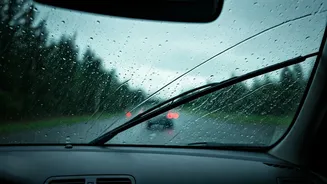
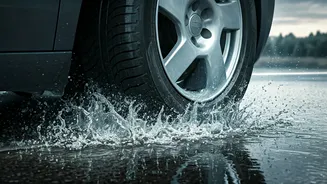
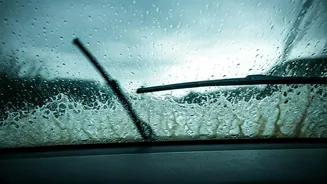
The best rainy day prep happens on a sunny one. Your car has three critical components for wet weather: wiper blades, tires, and lights. Inspect your wiper blades for cracks or stiffness; if they leave streaks or make a chattering sound, replace them.
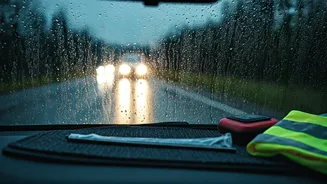
A good rule of thumb is to replace them every 6-12 months. Next, check your tire tread. The classic 'penny test' works: place a penny upside down in a tread groove. If you can see all of Lincoln's head, your treads are too worn and won't effectively channel water away, increasing your risk of hydroplaning. Finally, walk around your car and ensure all your lights—headlights, taillights, and turn signals—are working. They don't just help you see; they help others see you.
2. Slow Down and Double Your Distance
This isn't just friendly advice; it's physics. Wet roads dramatically reduce tire grip, which means it takes longer to stop. The speed limit is designed for ideal, dry conditions. In the rain, you should reduce your speed by at least a third. If the speed limit is 60 mph, think about driving closer to 40 mph, conditions permitting. Just as important is increasing your following distance. The standard 'three-second rule' for dry roads should be doubled to at least six seconds in the rain. This gives you more time to react to sudden stops or hazards, preventing a chain-reaction collision. It’s the single most effective thing you can do once you're on the road.
3. Turn On Your Lights and Defog
In many states, it’s the law: if your wipers are on, your headlights must be on. This is less about your ability to see and more about other drivers' ability to see you. A gray car on a gray, rainy day can easily disappear into the background spray. Using your headlights makes you visible. Inside the car, humidity can fog up your windows in seconds, creating a blindfold. Don't wait for it to become a problem. Turn on your car's defrost setting early, using the A/C to pull moisture out of the air. The air conditioning system is an excellent dehumidifier, even when you have the heat on. Clear sightlines are non-negotiable.
4. Know How to Handle a Hydroplane
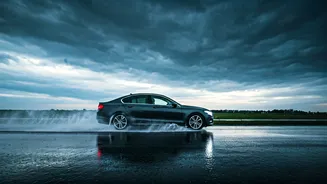
Hydroplaning is when your tires lose contact with the road and ride on a thin layer of water. It can feel like suddenly hitting a patch of ice. The instinct is to slam on the brakes or jerk the steering wheel, but this is the worst thing you can do. If you feel your car start to hydroplane, take your foot off the accelerator smoothly. Do not brake. Keep the steering wheel straight. If you need to turn, make very gentle, small adjustments in the direction you want to go. As the car slows, the tires should regain contact with the pavement, and you'll feel control return. The key is to make no sudden moves.
5. Disable Your Cruise Control
Cruise control is a fantastic feature for long, dry highway drives. In the rain, it’s a liability. The system is designed to maintain a constant speed, and if your car begins to hydroplane, the cruise control may actually try to accelerate to maintain that speed, making a dangerous situation even worse. By keeping your foot on the pedal, you remain the one in control of your speed and can respond instantly to changing road conditions. You are more attentive, more connected to the road, and better able to feel the subtle feedback the car is giving you. Turn it off as soon as the rain starts.
6. Be Wary of Puddles and Oily Slicks
That seemingly harmless puddle on the side of the road could be hiding a deep, wheel-damaging pothole. Avoid driving through standing water whenever possible. If you can't avoid it, slow down significantly before you enter it. Furthermore, the first few hours of a light rain are often the most dangerous. Rain mixes with oil and other fluids on the road surface, creating an exceptionally slippery film. Be especially cautious at intersections, where stopping and starting vehicles tend to deposit more of these fluids. Look for the telltale rainbow sheen on the pavement and treat those areas with extra care.