





More Than Just Muscle
For generations, the motivation for hitting the gym was often tied to aesthetics—slimming down, bulking up, or chasing an idealized physique. But a significant cultural shift is reframing the purpose of working out, especially when it comes to lifting
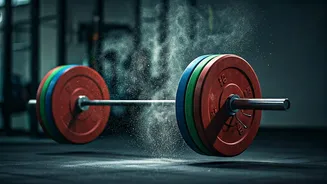
weights. The new goal isn’t just about changing how your body looks; it’s about changing how you feel in it. Strength training is becoming a mainstream practice for building mental fortitude, one rep at a time. This isn't the performative, look-at-me bravado of old-school gym culture. This is a quieter, more internal form of power. It’s the feeling a woman gets when she deadlifts her own body weight for the first time, or the sense of accomplishment a desk worker feels after mastering a pull-up. These moments aren't about impressing others. They are tangible proof of one's own capability, a private victory that builds a foundation of self-trust.
The Science of Self-Efficacy
This feeling has a name in psychology: self-efficacy. It’s the belief in your own ability to execute the behaviors necessary to produce specific outcomes. Coined by psychologist Albert Bandura, it’s a cornerstone of human motivation and achievement. Strength training happens to be one of the most effective self-efficacy engines you can find. The process is simple and powerful. You walk into a gym, unable to lift a certain weight. You follow a program, showing up consistently even when you don’t feel like it. You fail, you rest, you try again. And then, one day, you lift it. The feedback is immediate, objective, and undeniable. You did the thing you couldn’t do before. This cycle provides concrete evidence that your effort leads to results. Unlike many aspects of modern life—where career progress can be slow, relationships are complex, and feedback is ambiguous—the iron provides a clear, measurable scorecard. This repeated experience of setting a small goal and achieving it rewires the brain to believe, “I am someone who can do hard things.”
Reclaiming the Weight Room
Perhaps the most significant aspect of this trend is who is participating. For decades, the weight room was a hyper-masculine, often intimidating space. Women were largely steered toward cardio machines and light-impact group classes. Today, that stereotype is being decisively shattered. Women are claiming their space at the squat rack and barbell, and in doing so, they are challenging outdated notions of femininity and strength. Lifting heavy offers a direct rebuttal to the age-old instruction for women to be smaller, quieter, and take up less space. Instead, it encourages them to be powerful, to be resilient, and to literally occupy more space with confidence. This isn't about becoming more like men; it's about unlocking a form of personal power that was previously gatekept. Social media, for all its faults, has played a role here, allowing female lifters to share their progress, build community, and normalize the image of a strong woman.
From Physical Strength to Life's Challenges
The confidence built in the gym rarely stays there. The lessons from lifting have a remarkable way of bleeding into every other corner of life. Learning to push through the discomfort of the last few reps of a heavy set teaches you how to handle pressure during a tough project at work. The patience required to add five pounds to your bench press over several months translates into the persistence needed to navigate a complex personal goal. When you consistently prove to yourself that you can handle physical challenges, you start to believe you can handle emotional and professional ones, too. The barbell teaches you that plateaus are normal and that failure isn't an endpoint but a data point. This mindset—resilience in the face of struggle—is the true “flex.” It’s the quiet assurance that no matter the weight of the world, you’ve trained yourself to stand firm and push back.