




The New Liquid Gold
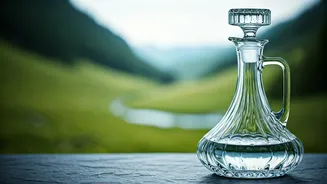
Walk into a high-end hotel or flip through a wellness influencer’s feed, and you’ll find it: water treated like wine. You’ll see descriptions of 'terroir,' discussions of mineral content, and price tags that can make a bottle of H2O cost more than a sandwich.
This isn't just about sparkling or still; it’s about branding a fundamental resource as a status symbol. Companies are marketing water sourced from 'virgin' forests, volcanic rock filters, or remote mountain springs, selling a story of purity and exclusivity. Brands like Liquid Death built a billion-dollar valuation by marketing canned mountain water with a heavy-metal aesthetic, proving that the image can be as valuable as the liquid itself. It's a masterclass in marketing: taking the most common substance on Earth and convincing a segment of the population to pay a premium for a specific, highly curated version of it.
From Aquifer to A-List
So, how does a quiet valley’s rainfall end up in a sleek, minimalist bottle on a C-suite executive’s desk? It begins with access. Entrepreneurs and corporations, often dubbed 'water prospectors,' identify regions with abundant, high-quality groundwater. These are often rural, picturesque areas—the 'green valleys' of the headline—in states like Oregon, Maine, Florida, or California. The business model involves securing water rights, which can be a complex and controversial process. In some parts of the U.S., the law favors landowners, allowing them to extract vast quantities of water from beneath their property with minimal oversight. A company might buy a piece of land with a productive spring, build a bottling plant, and start pumping. They are effectively privatizing a resource that local residents and ecosystems depend on, bottling it, and shipping it out for a massive profit. The initial investment can be high, but with bottled water being a multi-billion-dollar industry, the potential return is enormous.
The True Cost of a Luxury Bottle
The price on the bottle is only part of the story. The real costs are often externalized, paid by the environment and local communities. Large-scale water extraction can deplete aquifers, causing wells to run dry and threatening the flow of local streams and rivers. This puts farmers, fish, and entire ecosystems at risk. For years, residents in places like Fryeburg, Maine, or Strawberry, California, have fought battles against beverage giants like BlueTriton (formerly Nestlé Waters), arguing that the company’s operations were draining their shared water supply for private gain. Furthermore, the environmental footprint of shipping heavy glass or plastic bottles of water around the country is substantial. Critics argue it's the peak of environmental absurdity: manufacturing immense plastic and carbon waste to sell a product that, for most Americans, is available safely and cheaply from a tap.
Beyond the Bottle
The transformation of rain into luxury isn't limited to what we drink. The same principle applies to how water is used to create other high-end experiences. Think of the lush, emerald-green golf courses of Scottsdale, Arizona, which consume millions of gallons of water in the middle of the Sonoran Desert. That green grass is a luxury, manufactured with water that could have other uses. Consider California's almond and pistachio groves, which require immense amounts of water in a drought-prone state to produce nuts that are largely exported as premium agricultural goods. In both cases, a finite, shared resource—water—is being diverted to create a product or aesthetic that caters to a luxury market. The green valley isn't just a source for bottling; it's a template for creating exclusive, water-intensive lifestyles and products in places where water is increasingly scarce.