




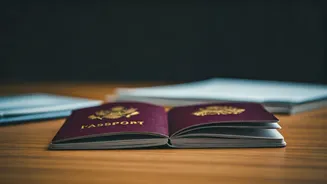


Understanding Passport Power
Most Americans are used to breezing through customs in dozens of countries with little more than a passport stamp. This freedom isn't universal. For citizens of many nations, international travel requires extensive paperwork, interviews, and expensive
visas with no guarantee of approval. The 'power' of a passport is measured by how many destinations its holder can access without a prior visa. The gold standard for this measurement is the Henley Passport Index, a global ranking that has become a benchmark for citizen mobility and a country’s diplomatic influence. The index uses data from the International Air Transport Authority (IATA) to rank 199 different passports based on their access to 227 travel destinations. A higher ranking means more visa-free or visa-on-arrival access, translating directly into freedom and opportunity for a country's citizens.
India's Leap Forward
In the latest rankings, the Indian passport has made a notable climb, now sitting around the 80th mark. This position grants its holders visa-free access to approximately 57 countries. While that number may seem modest compared to the 190+ destinations available to top-ranked passports from countries like Singapore or Japan, it represents a significant improvement. This jump isn't just a number on a list; it’s a tangible upgrade in global access for the world's most populous nation. The list of accessible countries now includes popular tourist spots and emerging business hubs across Asia, the Middle East, Africa, and the Caribbean. Destinations like Indonesia, Thailand, Oman, and Mauritius are now within easier reach, removing a major bureaucratic hurdle for millions of potential travelers.
More Than Just a Vacation
This enhanced mobility is about far more than tourism. For India's burgeoning middle class and ambitious entrepreneurs, it’s a game-changer. Easier travel facilitates international business, allowing executives and startup founders to attend conferences, meet clients, and explore new markets without the lengthy and uncertain visa application process. It also opens doors for students seeking educational opportunities abroad and for the vast Indian diaspora to more easily connect with family back home. In essence, a stronger passport acts as a lubricant for economic and cultural exchange. It’s a signal of a country’s growing diplomatic ties and its increasing trustworthiness on the world stage. As India’s economy continues to grow, its ability to project 'soft power'—cultural and economic influence—is partly reflected in the welcome its citizens receive abroad.
The Global Pecking Order
To fully appreciate India's position, it helps to look at the global context. At the top of the index, countries like Japan, Singapore, and a host of European nations (Germany, Spain, Italy) dominate, offering their citizens unparalleled travel freedom. The United States passport is also a top-tier document, typically ranking in the top 10 and providing access to over 185 countries. India's ranking places it in a competitive middle tier, alongside countries with similar economic trajectories. It sits ahead of some regional neighbors but still trails significantly behind China, whose passport offers access to over 80 destinations. The steady upward trend is what’s most significant. Each new visa-waiver agreement is a diplomatic win, and for the 1.4 billion people of India, it’s another small step toward leveling the global playing field.