






Know Your Mango Varieties
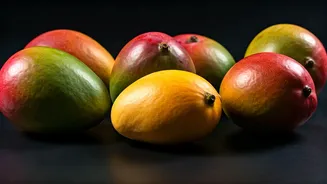
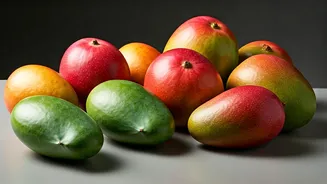
Walking into the produce section, you're often met with a pile of mangoes that look wildly different. Color isn't always the best indicator of flavor, as it varies by type. Here are a few you're most likely to encounter in the U.S.: * **Tommy Atkins:**
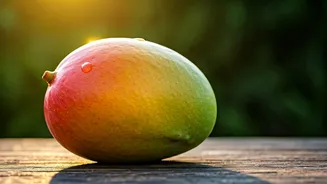
The classic American supermarket mango. It's large and firm, with a beautiful red blush over a green and yellow base. It’s mildly sweet and very fibrous, making it great for salsas or chutneys where texture is less critical. * **Honey (Ataulfo):** These small, kidney-shaped mangoes are a fan favorite. They turn a deep golden-yellow when ripe and have a creamy, fiber-free flesh with a rich, sweet, and slightly tart flavor. They are perfect for eating plain or blending into smoothies. * **Kent:** A large, oval mango that stays mostly green with a red or yellow blush even when ripe. Kents are beloved for their exceptionally juicy, tender flesh with very little fiber and a classic, sweet mango taste. * **Keitt:** Don’t be fooled by its green skin! This late-season variety can stay green even at peak ripeness. It’s another large mango with tangy-sweet, mostly fiberless flesh.
The Ripeness Test: Feel and Sniff
The single biggest mistake people make is judging a mango by its color. A red blush doesn't guarantee ripeness, as it's a characteristic of the variety, not its maturity. Instead, engage your other senses.
First, gently squeeze the mango. A ripe mango will give slightly, similar to a ripe peach or avocado. If it’s rock-hard, it needs more time on your counter. If it’s overly soft or mushy, it’s past its prime.
Next, bring it to your nose and sniff the area around the stem. A ripe mango will have a distinctly sweet, fruity, and fragrant aroma. If you don't smell anything, it's not ready. If it smells sour or alcoholic, it has begun to ferment and should be avoided. Trust your nose—it’s the best tool you have for finding a delicious mango.
The Art of the Cut
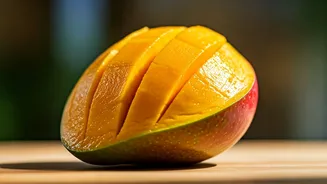
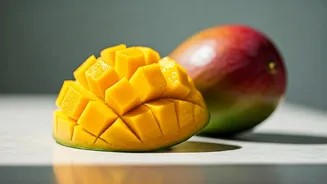
So you’ve brought home a perfect mango. Now what? The large, flat pit in the center can make cutting it a puzzle. The easiest and most impressive method is the “hedgehog” or “porcupine” cut.
1. **Find the Pit:** Stand the mango on its end, stem-side down. The pit is a large, flat oval in the center. Imagine it as a thick, vertical line running through the fruit.
2. **Slice the Cheeks:** Using a sharp knife, slice downward on either side of that imaginary line, cutting off the two fleshy “cheeks” of the mango. You should feel your knife slide just past the edge of the pit.
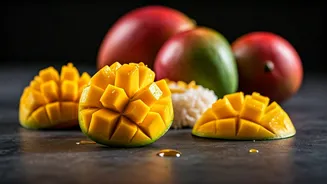
3. **Score the Flesh:** Take one of the cheeks and, without cutting through the skin, score the flesh in a grid pattern. Make parallel cuts vertically, then horizontally, creating small cubes.
4. **Invert and Enjoy:** Gently push the skin from the back, inverting it so the cubes of mango pop outward like a hedgehog’s quills. You can now easily scoop the cubes out with a spoon or simply bite them off the skin. Use your knife to trim any remaining fruit from around the pit.
Smart Storage Strategy
How you store your mango depends on its ripeness. If your mango is still hard and lacks fragrance, leave it on the kitchen counter at room temperature. It will continue to soften and sweeten over a few days. To speed up the process, you can place it in a paper bag with a banana or apple, which releases ethylene gas that promotes ripening.
Once your mango is perfectly ripe—it gives to a gentle squeeze and smells sweet—it’s time to act. You can either eat it right away or move it into the refrigerator. The cool temperature will dramatically slow the ripening process, giving you up to five more days to enjoy it. Sliced or cubed mango can be stored in an airtight container in the fridge for a few days or frozen for up to six months, perfect for future smoothies.
Easy Ways to Enjoy Your Mango
Beyond eating it straight from the peel, mango is an incredibly versatile ingredient. For a refreshing summer treat that requires no cooking, try a simple mango salsa: just dice mango, red onion, cilantro, and jalapeño, then finish with a squeeze of lime juice. It’s a spectacular topping for grilled chicken or fish tacos.
For an effortless breakfast or dessert, top Greek yogurt or vanilla ice cream with fresh mango cubes and a sprinkle of toasted coconut. Or, blend frozen mango chunks with a splash of coconut water for a simple, two-ingredient sorbet. The sweet, vibrant flavor can elevate almost any dish with a taste of the tropics.