





Crafting a Personal Narrative
Step into the apartment of a 20-something Indian American in a city like New York or Chicago, and you’re less likely to find a matching set of furniture from a big-box store. Instead, you might see a mid-century modern credenza topped with a vintage brass
lamp, paisley-print cushions tossed on a worn leather couch, and a collection of mismatched, hand-painted plates adorning a wall. This isn't just about decorating on a budget; it’s a conscious rejection of the impersonal, mass-produced look. For a generation raised on curated Instagram feeds, creating a home that feels unique and tells a personal story is paramount. Thrifting offers an escape from the catalogue. Every chipped mug, faded rug, or piece of carved wood comes with a history, imagined or real, that adds a layer of depth that new items simply can't.
A Bridge Between Cultures
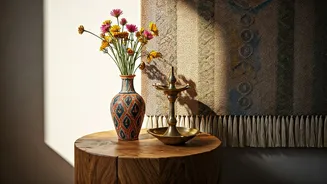
This trend is particularly resonant for young people navigating a dual identity. While they may not want the overwhelmingly traditional decor they grew up with—often characterized by dark, heavy furniture and specific religious iconography—they aren’t severing ties with their heritage. Instead, they’re selectively curating it. A vintage brass ‘lota’ (water pot) might become a vase for wildflowers. An old silk sari might be repurposed as a wall tapestry. These choices allow them to connect with their roots in a way that feels authentic to their modern, Western lives. It’s heritage, but on their own terms. Vintage pieces from both Western and Indian traditions are mixed to create a new visual language, one that says, “I am both, and I am proud.” This fusion aesthetic is a physical manifestation of the third-culture kid experience: a home that seamlessly blends influences without being confined by any single one.
Sustainability as a Status Symbol
For a generation deeply concerned with climate change and the ethics of consumerism, thrifting is more than a trend; it's a value system. Choosing a second-hand table over a new one from a fast-furniture brand is a quiet act of protest against waste and overproduction. In these social circles, having a home filled with sustainable, pre-loved items carries a certain cachet. It signals a level of conscientiousness and eco-awareness that is increasingly seen as a marker of good taste and social responsibility. The story of an item is not just “I bought it at a store,” but “I saved this from a landfill,” or “I found this beautiful piece at a flea market and gave it a new life.” This narrative transforms the act of furnishing a home from a purely consumptive one to a creative and restorative one.
The Economics of Good Taste
While the cultural and ethical drivers are strong, the economic reality can't be ignored. Young people today are often saddled with student debt and facing a high cost of living in major urban centers. Thrifting provides access to high-quality, often better-made items for a fraction of the cost of new ones. A solid wood dresser from the 1970s, found for $50 at a Goodwill, is not only cheaper but often more durable than a particleboard equivalent that costs four times as much. This financial savvy allows them to achieve a sophisticated, layered look that would otherwise be financially out of reach. It’s a way to bypass the traditional markers of a “grown-up” home, like buying an expensive sofa, and instead invest time and creativity to achieve an even more impressive result. The thrill of the hunt—the weekend trips to flea markets and the daily scrolling through online marketplaces—becomes part of the fun, turning decorating into an adventure rather than a chore.