

The Rejection of Cold Minimalism
For the better part of a decade, the aspirational kitchen was a study in sharp, geometric precision. Think waterfall countertops with 90-degree angles, stark white cabinetry, and a general feeling of clinical efficiency. This aesthetic, heavily influenced
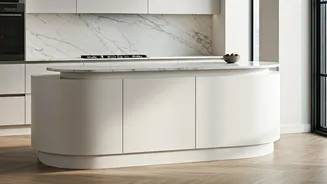
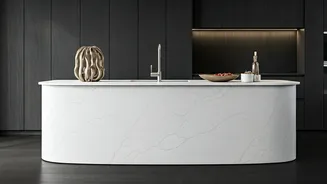
by a certain brand of austere modernism, prized clean lines above all. But trends, by their nature, invite a reaction. Interior designers catering to clients in hubs like Silicon Valley and Seattle report a distinct pivot away from this rigid style. The new ideal is softer, more organic, and decidedly more human. The rounded kitchen island is the primary ambassador of this shift. It physically and symbolically breaks from the grid, replacing severity with a gentle, sculptural presence. It's less a sterile workstation and more a piece of functional art, signaling a move towards homes that feel nurturing rather than just impressive.
The Psychology of a Curve
Our brains are hardwired to respond to shapes in specific ways. Neuroscientists and designers have long known that sharp angles can register as threatening or harsh, activating a subtle sense of caution. Curves, on the other hand, are perceived as safe, welcoming, and natural. They evoke things we find in the natural world—pebbles smoothed by a river, rolling hills, the arc of the horizon. This concept, known as biophilic design, is about incorporating nature into our built environments to reduce stress and improve well-being. A rounded island does just that. It eliminates harsh corners that you might bump into, creating a more fluid and intuitive path through the kitchen. For a demographic immersed in optimizing systems and user experience, applying the same principles to their personal space makes perfect sense. The island isn’t just a block of marble; it’s an interface for living, and a curved one offers a friendlier UX.
A Modern Hub for Collaboration
The kitchen island has long been the social heart of the American home, but its traditional rectangular shape subtly dictates social dynamics. People tend to line up on one side, facing the person working on the other—a configuration more suited to a bar or a presentation than a collaborative gathering. A rounded or circular island changes this geometry completely. It eliminates the 'head of the table,' allowing people to gather around it more organically. Conversation flows more easily when people can make eye contact without craning their necks. This mirrors the collaborative ethos prized in the tech industry, where open-plan offices and huddle spaces are designed to break down hierarchies and encourage spontaneous interaction. The rounded island brings that philosophy home, turning the kitchen into a central node for family collaboration, entertaining, and brainstorming—whether it’s about homework or the next billion-dollar idea.
The New Status Symbol: Bespoke Design
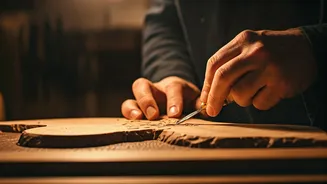
In a world where luxury goods are increasingly accessible, the ultimate status symbol is no longer just an expensive material—it’s craftsmanship and customization. A standard rectangular island can be bought off a showroom floor. A beautifully executed curved island, however, almost always requires a high degree of custom work. Fabricating a seamless curve from stone like marble or quartzite is technically challenging and expensive. It requires skilled artisans and sophisticated machinery, making it an understated but clear signal of a significant investment in bespoke design. For tech leaders who value innovation and elegant solutions to complex problems, a custom-curved island is a physical manifestation of those values. It says less about raw wealth and more about a sophisticated appreciation for form, function, and the subtle art of creating a perfectly considered environment.