



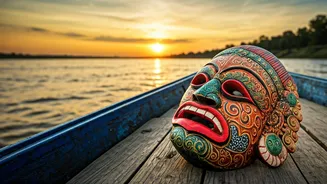


The River Island of Faith
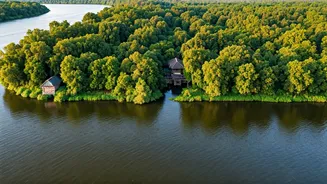
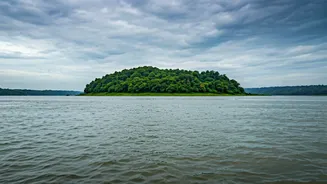
Majuli is the world’s largest river island, a verdant landscape of rice paddies and water hyacinths, accessible only by ferry. But its true majesty lies in its cultural and spiritual significance. For centuries, it has been the epicenter of Neo-Vaishnavism,
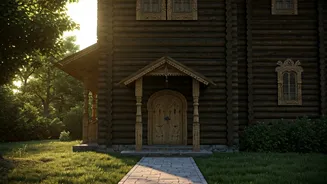
a monotheistic strain of Hinduism, fostered in monastic centers known as Sattras. These Sattras are not just places of worship; they are repositories of Assamese art, music, dance, and drama. It is within these peaceful, contemplative communities that the unique art of mask-making, or *mukha bhuana*, was born and continues to be practiced. The island's very rhythm—its isolation, its deep-rooted faith, and its connection to nature—provides the perfect cradle for this intricate tradition.
Gods and Demons in Bamboo and Clay
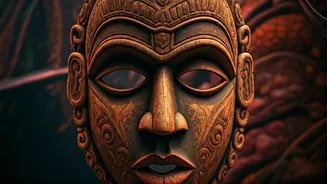
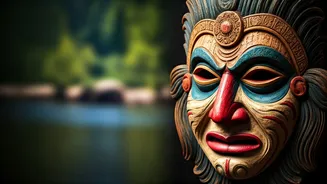
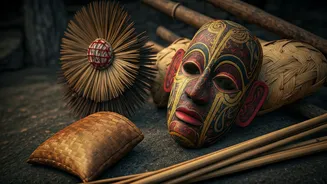
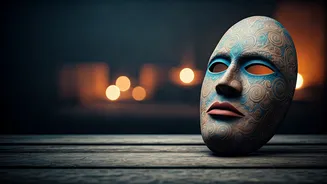
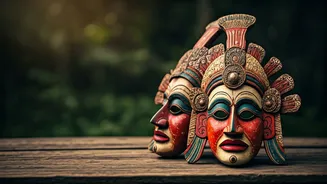
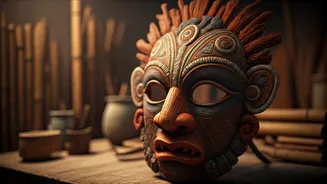
The masks of Majuli are not created to be hung on a wall. They are dynamic, sacred objects designed for performance. They are the faces of gods, goddesses, demons, and animals who populate the Hindu epics, worn by actors in religious plays called *Bhaona*. These performances, conceived by the 15th-century saint and artist Srimanta Sankaradeva, were a way to make religious stories accessible to all, regardless of literacy. A mask of the ten-headed demon king Ravana might be enormous and terrifying, while one depicting the loyal monkey god Hanuman is imbued with a sense of playful devotion. Each mask is a character, a vessel for storytelling that transforms the actor and captivates the audience, turning a village gathering into a divine spectacle.
The Artisan's Devotional Process
Creating a Majuli mask is an act of meditation, a slow, organic process that uses materials sourced directly from the island. It begins with a frame woven from bamboo strips. This skeleton is then covered with layers of cloth soaked in a unique paste of clay and cow dung, which is malleable when wet but hardens into a durable shell. The artisan sculpts the features—the sharp nose of a hero, the fierce scowl of a demon—with painstaking care. After drying in the sun, the mask is painted with vibrant, natural pigments. Modern masters like Dr. Hemchandra Goswami, who has dedicated his life to preserving and innovating the craft at his Sattra, describe the process as a form of prayer. The artisan isn't just making an object; they are giving physical form to a spiritual entity, channeling centuries of devotion into their hands.
A Legacy for the Future
Like the island itself, which faces threats from erosion, the mask-making tradition has faced challenges. In a fast-paced world, the demand for slow, handcrafted art can dwindle. However, a renewed focus on cultural preservation, driven by artisans like Goswami and a growing global appreciation for authentic heritage, is breathing new life into the craft. Workshops are training a new generation of artists, ensuring the skills are not lost. Travelers are increasingly seeking out Majuli not just for its scenic beauty but for the chance to witness this living history. These masks are more than just artifacts; they are a testament to the resilience of a community and the enduring power of art to connect the human with the divine.