




The Golden Spice and Its Secret
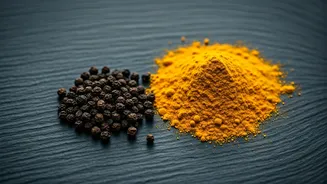
First, let's talk about the star of the show. Turmeric, the vibrant, yellow-orange spice that gives curry its signature color, has been a staple in South Asian cuisine and Ayurvedic medicine for thousands of years. Its reputation isn’t just built on flavor.
The power behind turmeric lies in a group of compounds called curcuminoids, the most important of which is curcumin. Curcumin is a potent antioxidant and is celebrated for its anti-inflammatory properties. In the wellness world, it's linked to everything from supporting joint health to promoting a healthy inflammatory response. It’s the reason turmeric went from a simple spice rack resident to a full-blown health icon. But there’s a catch, and it’s a big one.
The Problem with a Solo Act
On its own, curcumin is a bit of a diva with a terrible entourage. Our bodies are surprisingly bad at absorbing it. When you consume turmeric by itself, the curcumin passes through your digestive system too quickly for your bloodstream to effectively absorb and use it. Your liver rapidly metabolizes it and excretes it before it can work its magic. This issue is known as low bioavailability. Think of it like this: you can pour a gallon of water onto a waterproof jacket, but only a few drops will ever soak in. Consuming plain turmeric is a similar story; you get a tiny fraction of the potential benefit, with most of the good stuff going to waste.
Enter the Unsung Hero: Black Pepper
This is where black pepper, turmeric’s unassuming sidekick, comes in to save the day. The secret ingredient in black pepper is a compound called piperine. Piperine is what gives pepper its distinct, pungent kick, but its most valuable role in this partnership is its ability to solve curcumin’s bioavailability problem. It doesn't just add a little heat; it fundamentally changes how your body processes the curcumin. It’s the behind-the-scenes manager that ensures the star gets the spotlight. Without it, you're mostly just getting turmeric’s earthy flavor and vibrant color, but missing out on the main event.
The 2,000% Boost: How It Works
So, how does this magic trick work? Piperine acts as a bio-enhancer. It does this by inhibiting a process in your liver and intestinal wall called glucuronidation, which is your body's way of trying to make substances more water-soluble so they can be easily flushed out. By partially blocking this process, piperine allows curcumin to stick around longer and at higher concentrations, giving your body ample time to absorb it into the bloodstream. The results are staggering. Studies have shown that combining even a small amount of black pepper with turmeric can increase the bioavailability of curcumin by up to 2,000%. That’s not a typo. It’s the difference between a whisper and a megaphone, turning a minimal effect into a significant one.
Putting the Power Couple to Work
Knowing this, you can be more intentional about how you use turmeric. That sprinkle of pepper on your turmeric-roasted vegetables isn’t just for seasoning anymore—it’s for activation. If you're making a golden milk latte, a smoothie, or a soup with turmeric, always add a pinch or two of freshly ground black pepper. The ratio doesn’t have to be exact, but a general rule of thumb is about 1/4 teaspoon of black pepper for every teaspoon of turmeric powder. Another tip? Curcumin is fat-soluble, meaning it dissolves in fat. Combining it with a healthy fat source like coconut oil, avocado, or ghee can also help improve absorption. So, a turmeric curry made with coconut milk and black pepper is a perfect trifecta for maximum benefit.