


Why a New Moon Means No Moon
For stargazers, the Moon is often a beautiful nuisance. Its bright, reflected sunlight washes out fainter stars, constellations, and deep-sky objects, like a single bright streetlight ruining the view of a distant city skyline. A new moon phase solves
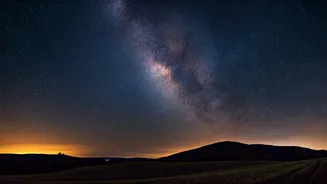
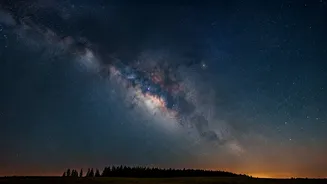
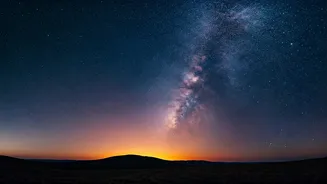
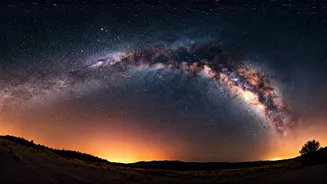
this problem entirely. This is the point in the Moon’s 29.5-day orbit when it passes between the Earth and the Sun. From our perspective, the side of the Moon being lit by the Sun is facing away from us. The side facing us is in shadow, rendering it virtually invisible. Furthermore, during a new moon, the Moon is in the same part of the sky as the Sun, meaning it rises and sets with the Sun. When darkness falls, the Moon is already long gone below the horizon. The result? A truly dark, moonless night from dusk until dawn—the absolute best-case scenario for any celestial observing, from the naked eye to a high-powered telescope.
What to Spot in the Spring Sky
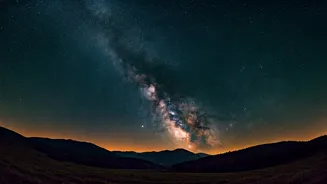
With the lunar glare gone, the sky’s supporting cast gets its time to shine. The period of the Taurus new moon, typically in late April or early May, offers a spectacular celestial menu. Look toward the south after sunset for the majestic constellation Leo, the Lion, marked by a backward question mark of stars that forms its head and mane. High overhead, you’ll find the Big Dipper, part of the larger Ursa Major constellation. Use its handle to "arc" to the bright orange star Arcturus in the constellation Boötes.
This time of year also often coincides with the peak of the Eta Aquariid meteor shower. While its radiant (the point from which the meteors appear to originate) is best seen from the Southern Hemisphere, observers in the southern U.S. can still catch a decent show in the pre-dawn hours. These meteors are tiny, dusty debris left behind by Halley's Comet, and on a moonless night, you might spot 10 to 20 swift “shooting stars” per hour.
Your Guide to a Perfect Viewing Night
You don’t need expensive equipment to enjoy this celestial event. The most important tool is darkness. Try to get as far away from city light pollution as you can. A rural park, a quiet back road, or even a suburban backyard with the house lights off can make a huge difference.
Second, give your eyes time to adjust. It takes about 20-30 minutes for your pupils to fully dilate and adapt to the dark, allowing you to see thousands more stars than you could initially. Avoid looking at your bright phone screen, which will instantly reset your night vision. If you need a light, use a flashlight covered with red cellophane or a headlamp with a red-light mode. Red light is less disruptive to your dark-adapted eyes.
Finally, get comfortable. Bring a blanket or a reclining lawn chair so you can gaze upwards without straining your neck. A good pair of binoculars can dramatically enhance the view, revealing the faint fuzz of distant star clusters and nebulae otherwise invisible to the naked eye.
A Quick Nod to the Bull
While this event is labeled the “Taurus” new moon, you won’t actually be looking at the constellation Taurus. The term simply refers to the Sun’s position in the zodiac. During this period, the Sun is passing through the region of the sky defined as Taurus. Since the new moon is always near the Sun, it too is in Taurus. By the time the sky is dark enough for stargazing, the Sun and Moon (and the constellation Taurus) will have already set in the west. The name serves as a seasonal marker, signaling that we are in that sweet spot of spring when the nights are still long and cool, but the spectacular starfields of summer are beginning to rise in the east.