




Meghalaya: Walk Across Living Bridges
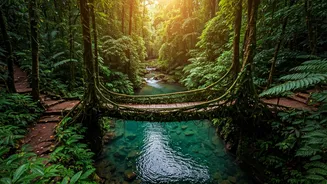
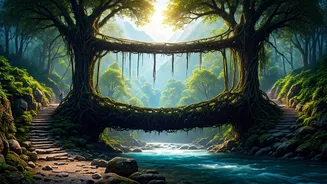
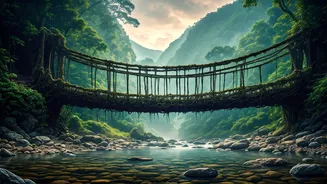
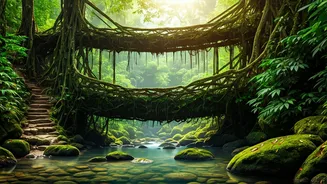
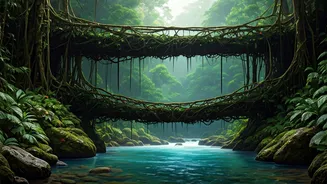
Known as the 'Abode of the Clouds,' Meghalaya is a land of dramatic monsoons, cascading waterfalls, and a culture deeply intertwined with nature. Its most famous marvels are the living root bridges. For centuries, the local Khasi and Jaintia peoples have
trained the aerial roots of rubber fig trees to grow across rivers, forming sturdy, living suspension bridges that strengthen over time. Trekking to the double-decker bridge in Nongriat is a journey into a real-life fantasy world, descending thousands of stone steps through a misty jungle. This isn’t just a photo op; it’s a testament to sustainable engineering and a symbiotic relationship between humans and the forest. Beyond the bridges, you can explore some of the world’s longest cave systems or simply stand in Cherrapunji, one of the wettest places on the planet, and watch the clouds roll in below you.
Assam: In the Land of Rhinos
If your dream of India involves wildlife, Assam is the answer. This is the home of Kaziranga National Park, a UNESCO World Heritage site and the primary stronghold for the magnificent one-horned rhinoceros. An early morning jeep safari here feels prehistoric, as you navigate grasslands teeming with wild elephants, water buffalo, and countless bird species, all while searching for the park’s iconic armored giants. The mighty Brahmaputra River, which flows through the state, creates a fertile floodplain that supports this incredible biodiversity. A river cruise offers a different perspective, revealing a landscape of sandbars and small villages dependent on the river’s rhythm. Assam provides a safari experience that rivals Africa’s but with a uniquely Asian feel—less about luxury lodges and more about raw, untamed nature.
Arunachal Pradesh: The Last Shangri-La
For the truly adventurous traveler seeking solitude and spirituality, Arunachal Pradesh is the ultimate prize. Sharing borders with Bhutan, Tibet, and Myanmar, this mountainous state is one of India's most remote and least-visited regions, often called 'India's Last Shangri-La.' The journey here is part of the experience, with winding roads ascending into the Eastern Himalayas. The reward is breathtaking landscapes of snow-capped peaks, pristine alpine lakes, and dense forests. The state’s cultural heart is Tawang, home to the second-largest Buddhist monastery in the world. The sight of the massive, centuries-old Tawang Monastery perched at 10,000 feet, with prayer flags fluttering in the crisp mountain air, is profoundly moving. This is a place to disconnect, hike through rhododendron forests, and experience a Tibetan-influenced culture that has remained preserved by its isolation.
Sikkim: Views from the Top of the World
Formerly a tiny Himalayan kingdom, Sikkim is now one of India’s most pristine and well-organized states for tourism. It’s the perfect introduction to the Himalayas for those who want stunning views without the extreme rigors of a major expedition. The main attraction is the majestic Kangchenjunga, the world's third-highest peak, which dominates the skyline from almost everywhere in the state. From the charming capital of Gangtok to the peaceful town of Pelling, you’re never far from a viewpoint that will leave you breathless. Sikkim is a land of serene monasteries, terraced rice fields clinging to steep hillsides, and a reputation for cleanliness and environmental stewardship. It offers a gentler, more accessible version of the Himalayan experience, blending Nepali, Bhutia, and Lepcha cultures into a unique and welcoming mountain society.