
The Emptiness of the Camera Roll
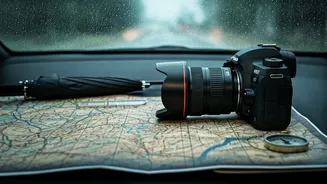
We’ve all done it. Standing in front of a magnificent cathedral or a breathtaking sunset, we take 50 near-identical photos, convinced that one of them will perfectly bottle the feeling of being there. We spend minutes adjusting filters, agonizing over
the crop, and then post it with a generic caption. Days later, the image is buried in an endless camera roll, a digital ghost of a moment we were too busy documenting to actually experience. This is the paradox of modern travel photography: it often distances us from the very experiences we seek to preserve. The focus shifts from observation to curation, from feeling to broadcasting. The resulting collection of images can feel surprisingly hollow, a curated highlight reel that misses the texture, the sounds, and the small, imperfect details that truly define a journey.
The Art of Slowing Down
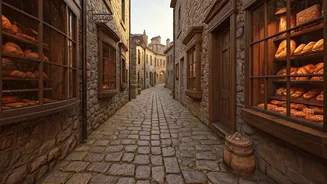
This is where art journaling enters the chat. It’s the antithesis of the rapid-fire digital snap. To sketch a building, you must truly *see* it. You have to notice the curve of the archways, the specific shade of the weathered stone, the way the light hits a windowpane. You’re not just capturing an image; you’re engaging in a dialogue with your surroundings. This simple act of focused observation is transformative. It forces you to sit still for 20 minutes on a bustling piazza, absorbing the rhythm of the city instead of just passing through. You'll notice the old man who has read his newspaper on the same bench every day for 40 years, or the specific way the local ivy climbs the walls. These are the details that don't make it into a quick photo but become indelible when you’ve taken the time to render them with your own hand.
A Multi-Sensory Memory Bank
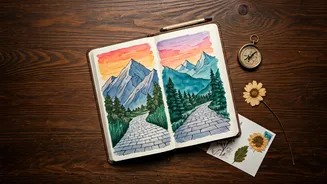
An art journal is so much more than a sketchbook. It’s a scrapbook, a diary, and a tactile artifact of your time in a place. It’s the ticket stub from the train ride through the Swiss Alps, glued next to a quick watercolor of the mountain peaks. It’s a pressed flower from a walk in the English countryside. It's the wrapper from a particularly delicious Parisian chocolate, a hastily scrawled list of new words you learned, and maybe even a coffee stain from a chaotic café in Rome. Flipping through an art journal months or years later engages all your senses. You can feel the crinkle of the taped-in receipt, smell the faint scent of the pressed leaf, and remember the frustration and eventual triumph of sketching that complicated fountain. It’s a richer, more visceral form of memory recall that a sterile, chronological photo gallery can never replicate.
The Quietest, Loudest Flex
This brings us to the “flex.” In a world obsessed with external validation—likes, comments, follower counts—the art journal is an act of radical self-focus. Its value is not determined by an algorithm or public approval. It’s a flex because it demonstrates you had an experience so rich and compelling that it couldn’t be contained in a single, filtered square. It says, “I wasn't just here to show you I was here; I was here to *be* here.” The most personal flex is choosing deep engagement over shallow performance. It’s the quiet confidence of knowing you have a private, treasured record of your adventure that is uniquely, un-shareably yours. You didn't just see the Colosseum; you spent an hour understanding its form, its history, its very presence, and you have the ink-smudged, imperfect, and beautiful evidence to prove it to the only audience that matters: yourself.