





From Tidy to Truly Healthy
The first wave of home wellness was largely aesthetic. Inspired by Marie Kondo, we tidied our closets and cleared our countertops, seeking calm through minimalism. While a clean space certainly has psychological benefits, the new chapter of home wellness is far
more functional. It’s a movement rooted in the understanding that our environment directly impacts our biology. This isn’t just about feeling good in your space; it's about your space actively doing good for you. Think of it as the difference between a home that looks peaceful and a home that is engineered for peace. This practical push integrates principles from public health, biophilic design, and ergonomics directly into consumer-friendly decor and technology, making a healthy home an achievable goal rather than a luxury.
Light That Works with You
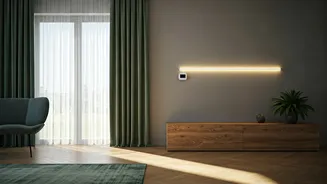
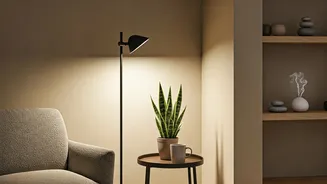
One of the most significant shifts is in lighting. We’ve learned that the harsh blue light from screens and standard bulbs can disrupt our circadian rhythms, affecting sleep, mood, and even metabolism. The practical wellness response is human-centric lighting. This goes beyond installing a simple dimmer switch. Smart lighting systems can now automatically adjust their color temperature and brightness throughout the day, mimicking the natural arc of the sun. In the morning, they emit a brighter, cooler light to help you feel alert. As evening approaches, they transition to a warmer, amber glow that signals to your brain it’s time to wind down. Brands are now offering everything from individual smart bulbs to fully integrated home systems, making it easier than ever to align your indoor lighting with your body’s natural clock.
Breathing Room, Literally
Indoor air quality has become a top priority for health-conscious homeowners. With Americans spending up to 90% of their time indoors, the air we breathe at home matters. Previously, air purifiers were often bulky, noisy, and utilitarian. Now, design-forward companies are creating sleek, quiet units that blend seamlessly into decor. But the trend extends beyond standalone devices. The push for practical wellness has led to a surge in demand for non-toxic building materials. Homeowners are increasingly choosing low-VOC (volatile organic compound) paints, natural fiber rugs made from wool or jute, and solid wood furniture that doesn’t off-gas harmful chemicals. These choices collectively reduce the pollutant load in your home, creating a healthier sanctuary from the outside world.
Designing for Rest and Restoration
As work-from-home becomes a permanent reality for many, the lines between office and living space have blurred. In response, there's a growing movement to intentionally design “restorative zones” within the home. This isn’t just a comfy chair; it’s an entire ecosystem built for unwinding. It might be a reading nook with an ergonomic chaise lounge that supports your posture, a corner with acoustic felt panels to dampen noise, or a bathroom transformed into a spa-like retreat with a deep soaking tub and aromatherapy shower. The focus is on engaging the senses in a positive way—through touch (plush textiles), sound (noise-cancellation), and sight (clutter-free views or integrated greenery). It’s a practical acknowledgment that in a hyper-connected world, we need to design physical spaces that give us permission to disconnect.
The Rise of the Wellness Kitchen
The kitchen has always been the heart of the home, and now it's becoming the hub of its health. Practical wellness is transforming kitchen design to make healthy habits easier. High-performance water filtration systems are being integrated directly into faucets, providing clean, great-tasting water on demand. Refrigerators are being designed with dedicated “wellness drawers” that have specific temperature and humidity controls to keep fresh produce vibrant for longer. Even pantry organization has a role to play, with a focus on clear, accessible containers that put healthy ingredients like whole grains and nuts front and center, nudging families toward better nutritional choices through sheer convenience.