






What is AI-Powered Fitness?
For years, a 'smart' workout meant following a pre-recorded video on an app. But a new generation of fitness technology is taking 'smart' to a whole new level. We're not talking about simple rep counters or heart rate trackers on your watch. We're talking about artificial
intelligence that acts like a digital personal trainer, using your device's camera or dedicated 3D sensors to watch, analyze, and correct your every move in real time. Think of it as the difference between watching a cooking show and having a chef in your kitchen guiding your hands. Companies like Tempo, Tonal, Freeletics, and Future are building platforms where an AI algorithm doesn't just serve you a workout plan; it actively participates in it, providing feedback that was once the exclusive domain of in-person trainers.
How It Actually Watches You
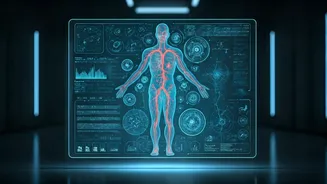
The magic behind this technology is primarily computer vision. In its simplest form, an app uses your smartphone's camera to identify key joints—your shoulders, hips, knees, and ankles. By tracking the position of these joints throughout an exercise, the AI can map your movement and compare it to a model of ideal form. More advanced systems, like those found in smart home gyms such as Tempo, use 3D infrared sensors to create a much more detailed model of your body. This allows the AI to not only see your form but also to understand your position in three-dimensional space, leading to more accurate feedback. Is your right knee caving in during a lunge? The AI sees it. Are your shoulders rounding during a deadlift? It can flag that, too, often with an on-screen cue or an audio prompt to 'keep your chest up.'
More Than Just Correcting Form
While real-time form correction is the headline feature, the personalization goes deeper. The 'every single rep' part of the promise isn't just about safety; it's about effectiveness. The AI is learning from your performance. If it sees you breezing through a set of 12 push-ups with perfect form, it might suggest you try a more challenging variation next time or increase your rep target. Conversely, if you're struggling to complete a set, it can dynamically lower the weight recommendation or suggest a modification. This creates a data-driven feedback loop for progressive overload—the core principle of getting stronger. Instead of guessing what weight to use or when to push harder, the system makes an informed suggestion based on your actual performance, rep by rep. It can track your range of motion, the speed of your reps, and your time under tension, using that data to ensure your next workout is perfectly calibrated to challenge you.
The Benefits of a Digital Spotter
For many people, the biggest barrier to effective strength training at home is a lack of confidence and guidance. AI fitness aims to solve that. The primary benefit is safety. By providing immediate feedback, it can help prevent the bad habits that lead to injury. Second is motivation. Getting real-time data and hitting AI-suggested targets can feel like a video game, making workouts more engaging. Finally, there's accessibility. While a good personal trainer can cost upwards of $100 per hour, these AI services offer a taste of that personalized guidance through a monthly subscription, bringing sophisticated coaching to a much wider audience.
Is It Better Than a Human?
For all its technical prowess, AI fitness still has its limitations. An AI can tell you to drop your hips, but it can't understand the unique biomechanics of your body or the reason *why* you're struggling with a movement—is it a mobility issue, a strength imbalance, or just fatigue? It also can't provide the emotional support, accountability, and camaraderie that a human coach or a group class can. While some services try to bridge this gap by pairing the AI with check-ins from a human trainer, the technology itself is a tool for physical optimization, not a replacement for human connection. Furthermore, the quality varies significantly between platforms. An app using a 2D phone camera in a poorly lit room will be far less reliable than a dedicated system with 3D sensors. But as the technology improves and becomes more widespread, the line between digital and human coaching will continue to blur.