






The Dirty Secret in Your Trash Can
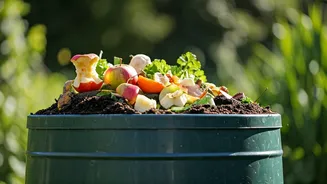
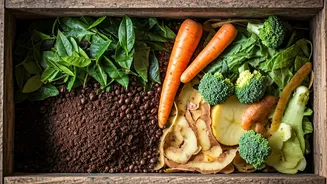
When you throw food scraps into your regular trash, they end up in a landfill, buried under tons of other garbage. Deprived of oxygen, this organic matter doesn't decompose neatly into soil. Instead, it undergoes anaerobic decomposition, a process that
releases methane—a greenhouse gas over 25 times more potent at trapping heat than carbon dioxide. According to the EPA, food is the single largest category of material placed in municipal landfills, and these landfills are the third-largest source of human-related methane emissions in the United States. Your leftover salad isn't just rotting; it's actively contributing to a warmer planet. This isn't an abstract environmental issue happening 'out there.' It's a direct consequence of a daily habit in millions of urban kitchens. The 'wake-up call' is realizing that our individual food waste, multiplied across a city, creates a massive environmental footprint that we have the power to shrink.
Debunking the Apartment Composting Myths
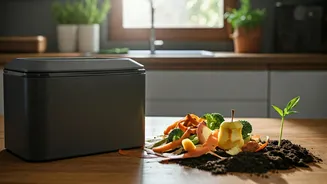
For most city dwellers, the word 'compost' conjures images of a sprawling, smelly pile in a suburban backyard—an impossibility for a 700-square-foot apartment. This outdated image is the biggest barrier to urban composting. It’s time to bust the three main myths: space, smell, and pests. **Myth 1: 'I don't have the space.'** Modern composting solutions are designed specifically for small living. A worm bin can be the size of a storage tote and tucks neatly under a sink or in a closet. A countertop electric composter is no bigger than a bread machine. Lack of a yard is no longer an excuse. **Myth 2: 'It will smell.'** A properly managed compost system does not smell bad. Foul odors are a sign of imbalance, usually too much moisture and not enough air. Worm bins, when maintained, have a faint, earthy scent, like a forest floor after it rains. Bokashi bins are airtight and produce a pickled, vinegary smell only when opened. Electric composters are fully enclosed and odorless. **Myth 3: 'It will attract pests.'** Roaches and fruit flies are attracted to exposed, rotting food—not a sealed, managed compost system. An enclosed bin keeps pests out. The key is managing your scraps correctly, which is far simpler than you’d imagine.
Your Urban Composting Toolkit
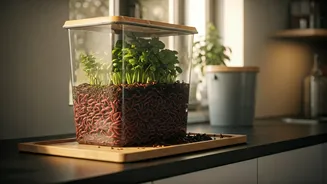
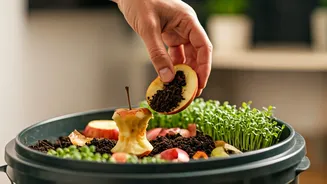
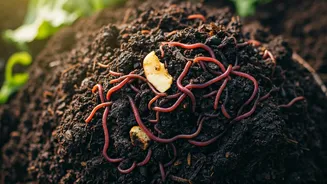
Ready to get started? You don't need a green thumb, just a willingness to try. Here are three popular methods perfect for urbanites. **1. Vermicomposting (The Worm Bin):** This is the gold standard for small-space composting. A colony of red wiggler worms lives in a bin with bedding (like shredded newspaper) and happily eats your fruit and vegetable scraps, coffee grounds, and crushed eggshells. They turn waste into 'vermicast,' an incredibly nutrient-rich fertilizer that house plants adore. A starter kit is affordable, and maintenance is minimal—just feed them your scraps every few days and keep the bedding moist. **2. Electric Countertop Composters:** For those who want a high-tech, effortless solution, these appliances are a game-changer. You toss your scraps in, press a button, and a few hours later, a cycle of heating, grinding, and drying reduces the food to a sterile, soil-like fertilizer. They can handle things most home composts can't, like meat and dairy. The tradeoff is cost and electricity use, but the convenience is undeniable. **3. Bokashi Bin:** This Japanese method isn't technically composting but fermentation. You press food scraps into an airtight bucket and sprinkle them with an inoculated bran. The microbes ferment the waste, preventing rot and smell. After a few weeks, you can drain the 'Bokashi tea' (a potent liquid fertilizer) and bury the fermented solids in a garden or planter. It's a great pre-composting step that takes up very little space.
No Bin? No Problem.
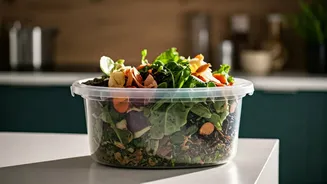
If you're not ready to bring a composting system into your home, you can still divert your food waste from the landfill. A growing number of cities and communities offer simple alternatives. Many farmers' markets have designated food scrap drop-off points, allowing you to collect your scraps in a container in your freezer and bring them on your weekend market run. Some municipalities also offer curbside organic waste collection, just like recycling. Look up your local sanitation department or a service like ShareWaste, a platform that connects people with scraps to neighbors who have compost piles. The goal is to keep food out of landfills, and there's more than one way to do it.