




The Million-Dollar Shoebox
First, let's talk about space. Or rather, the lack of it. In major metropolitan hubs like Mumbai, Delhi, and Bengaluru, the dream of a spacious home is increasingly a luxury reserved for the ultra-wealthy. For millions of young professionals and families,
home is a compact apartment, often smaller than a typical one-bedroom in New York or Chicago. This isn't just a housing trend; it's the fundamental reality shaping daily life. A 600-square-foot apartment isn't a starter home; for many, it's the long-term plan. This intense space crunch is the primary driver for innovation. Every square inch has to earn its keep, and a static piece of furniture that only serves one purpose—like a dedicated guest bed or a formal dining table—is an extravagance that few can afford.
When Your Home Is a Hub
Unlike the more individualistic approach to living common in the U.S., an Indian home is rarely just for the people who pay the mortgage. It’s a social and familial hub. Parents might come to stay for weeks or months at a time. Cousins visit from out of town. Festivals require space for groups to gather and celebrate. Hospitality isn't just a nicety; it's a deeply ingrained cultural expectation. You must have a way to comfortably host guests, even if you don't have a guest room. Furthermore, the pandemic cemented the home's role as an office and, for many, a classroom. Suddenly, that one-bedroom apartment needs to be a workspace for two adults, a play area for a child, a dining room for the family, and a comfortable bedroom for visiting grandparents—all at the same time.
Enter the Transformers
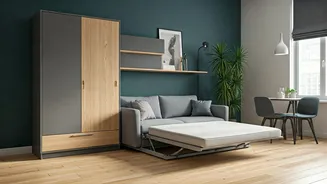
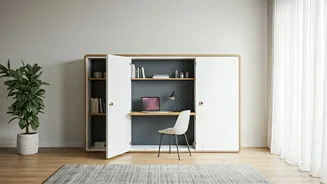
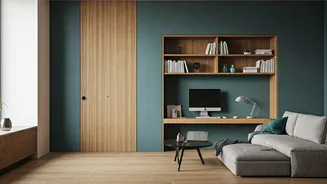
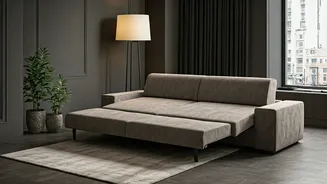
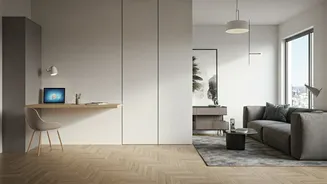
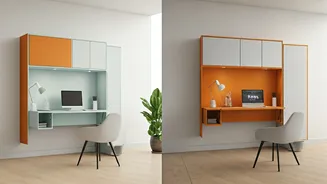
This is where furniture with 'multiple personalities' comes in. We’re not talking about a simple futon. Indian designers and furniture companies are creating sophisticated 'transformer' furniture that would impress a Hollywood set designer. Imagine a sleek, modern wall unit. By day, it’s an entertainment center with a bookshelf. At night, a queen-sized murphy bed folds down from it. Another panel might fold out to become a work-from-home desk. Coffee tables are engineered to hydraulically lift and expand into six-person dining tables. Sofas cleverly contain hidden bunk beds, ready to accommodate visiting nieces and nephews. These pieces are chameleons, allowing a living room to become a bedroom, an office, or a dining hall in minutes. They solve the functional problem of space without forcing people to compromise on the cultural imperative to host and gather.
Aspirations and Aesthetics
Crucially, this trend is not just about utility. It’s about aspiration. The new generation of urban Indian consumers is globally aware and design-savvy. They don’t want clunky, purely functional pieces that scream “I live in a small apartment.” They want furniture that is elegant, modern, and reflective of a successful, contemporary lifestyle. The demand is for clean lines, high-quality materials, and clever engineering that feels seamless, not sacrificial. This new wave of multi-functional furniture is a status symbol in itself. It signals that you are smart, resourceful, and living a modern life to the fullest, even within the constraints of urban geography. It’s a solution that feels like an upgrade, not a compromise, perfectly matching the ambitious spirit of its target audience.