







The Bleeding Goddess of Assam
Before you can understand the digital art, you have to understand the festival that inspired it. The Ambubachi Mela is an annual Hindu pilgrimage held at the Kamakhya Temple in Guwahati, Assam. Unlike any other major religious festival, its focal point
is the menstruation of the resident goddess, Kamakhya Devi. For four days, the temple doors close to honor the belief that the goddess, and by extension Mother Earth, is undergoing her annual period. It’s a profound celebration of fertility, creation, and the raw power of nature. Pilgrims, particularly from the Tantric tradition, flock to the site from all over India and beyond. They don't come to worship an idol in the traditional sense, as the temple's inner sanctum houses a rock formation shaped like a yoni (vulva) that is fed by a natural underground spring. During the festival, the waters are said to run red, a phenomenon devotees believe to be the goddess’s menstrual blood. The event is a vibrant, intense, and deeply spiritual affair, far removed from the sterile world of code and servers.
From Ancient Ritual to AI Renaissance
So how did this ancient, earthy festival become a muse for artificial intelligence? As the 2024 Ambubachi Mela unfolded in late June, a parallel event was happening on social media platforms like Instagram and X (formerly Twitter). Under hashtags like #AmbubachiMela and #AIart, a torrent of stunning, hyper-realistic, and fantastical illustrations appeared. These weren't photos or traditional paintings. They were the product of generative AI tools like Midjourney and DALL-E. Users, from professional graphic designers to amateur enthusiasts across India, were feeding text prompts into these programs, asking them to visualize the festival’s spirit. Prompts likely included keywords like “Kamakhya Temple,” “divine feminine energy,” “sadhus in meditation,” and “goddess Shakti.” The AI, trained on billions of images from across the web, responded by generating entirely new artwork that blended traditional Hindu iconography with a distinctly digital aesthetic.
Cyberpunk Sadhus and Ethereal Temples
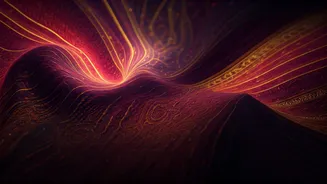
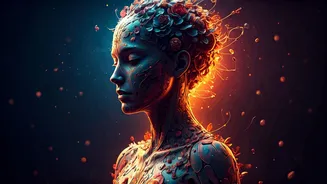
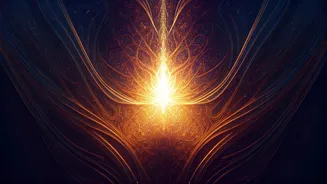
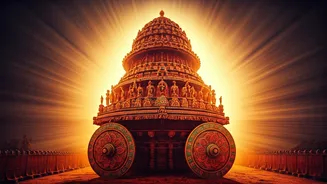
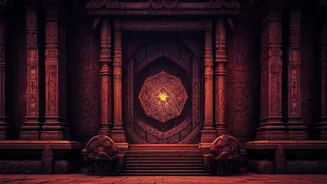
The resulting art is a spectacle in itself. In many images, the iconic beehive-shaped dome of the Kamakhya Temple is reimagined, sometimes glowing with an otherworldly blue light, surrounded by swirling cosmic energies, or rendered with impossible architectural detail. The sadhus, or holy men, who are a major presence at the festival, are depicted with a cyberpunk edge—their traditional saffron robes and matted hair contrasted with neon-lit backgrounds and dramatic, cinematic lighting. The goddess herself is rarely shown directly, respecting the abstract nature of her worship at the temple. Instead, her presence is implied through symbols: a glowing yoni, a radiant lotus flower, or a powerful female figure whose face is obscured by light. The art amplifies the mysticism of the event, transforming the gritty reality of a crowded pilgrimage into a clean, beautiful, and highly shareable digital fantasy. It’s a vision of the Ambubachi Mela filtered through a Hollywood blockbuster lens.
A New Form of Digital Devotion?
This trend represents more than just a cool art project. It’s a fascinating case study in how technology is creating new ways for people to engage with faith and culture. For many, creating and sharing this art is a form of 'digital darshan'—a way of participating in the festival and showing devotion, even from thousands of miles away. It globalizes a regional event, introducing the unique story of the menstruating goddess to an international audience that might never have heard of it otherwise. Of course, the phenomenon isn't without complexity. Some purists may argue that these polished, idealized images sanitize the raw, physical nature of the festival. But for a younger, digitally native generation, it’s a way to connect their spiritual heritage with the modern tools that define their world. It proves that tradition isn't static; it can be reinterpreted, remixed, and reborn in the most unexpected of places—including the digital canvas of an artificial intelligence.