








From Public Program to Private Enterprise
The single biggest change defining this new era is the rise of the private sector. For most of history, going to space was something only the world’s most powerful governments could afford. The Apollo program, for example, was a monumental national effort
driven by Cold War geopolitics. NASA designed the hardware, managed the missions, and footed the astronomical bill, which consumed over 4% of the federal budget at its peak. Today, that model has been turned on its head. NASA now often acts as a customer rather than the sole operator. Programs like the Commercial Crew Program hire companies like SpaceX and Boeing to ferry astronauts to the International Space Station (ISS). This public-private partnership is the engine of the new space age. By outsourcing transportation, NASA can focus its resources on more ambitious, deep-space goals, like the Artemis program to return humans to the Moon.
The Reusability Revolution
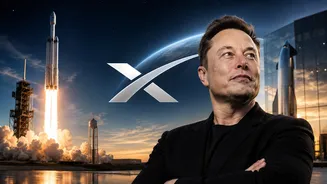
What made this commercial shift possible? In a word: reusability. For sixty years, the rockets we used to get to space were fantastically expensive, single-use machines. Imagine flying from New York to London on a plane that was scrapped after one trip. That was the economic reality of spaceflight. SpaceX, led by Elon Musk, fundamentally broke that paradigm by proving that first-stage rocket boosters could not only be landed but also refurbished and flown again. The synchronized, vertical landing of two Falcon Heavy boosters in 2018 wasn't just a stunning spectacle; it was a watershed moment for the industry. This innovation drastically slashed the cost of reaching orbit, opening the door for a host of activities that were previously economically unviable. Companies like Blue Origin and Rocket Lab are pursuing their own reusable technologies, turning what was once a novelty into the new industry standard.
Beyond Flags and Footprints
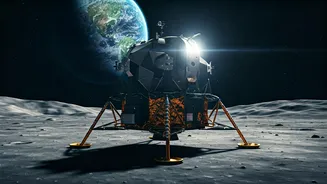
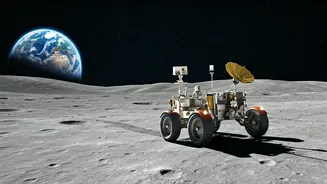
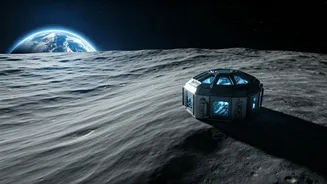
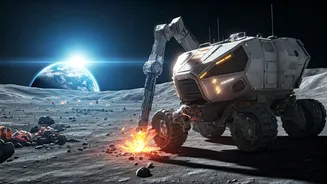
The goals of space exploration have also evolved. While the Apollo era was about planting a flag and getting home safely, today's ambitions are about building a permanent, sustainable human presence off-world. NASA's Artemis program isn't just a repeat of the 1960s; the plan is to establish a permanent base camp on the Moon's surface and a supporting orbital station called the Gateway. This lunar outpost would serve as a proving ground for technologies and strategies needed for the next giant leap: sending humans to Mars. Beyond human exploration, this new era is about economic development. Private companies are planning their own space stations to succeed the aging ISS, creating orbital labs and manufacturing hubs. Others have their sights set on asteroid mining for rare minerals or building vast satellite constellations, like Starlink, to provide global internet access.
A Crowded and Competitive Cosmos
Finally, this new era is far more crowded. The original space race was a two-horse affair between the United States and the Soviet Union. Today, the field is packed with players. Nations like China have robust, independent space programs with their own space stations and lunar ambitions. India and the United Arab Emirates have successfully sent probes to Mars and the Moon, establishing themselves as serious contenders. At the same time, a vibrant ecosystem of startups is tackling everything from satellite deployment to debris removal and in-space manufacturing. This competitive pressure—from both rival nations and nimble startups—is accelerating the pace of innovation. The result is a dynamic, sometimes chaotic, but incredibly productive environment where a launch that would have been front-page news a decade ago is now an almost weekly occurrence.