


A Stage Set Against the Heavens
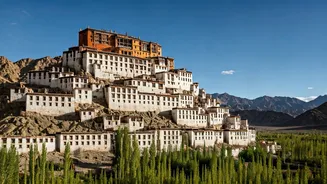
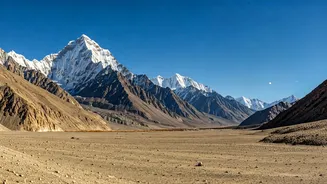
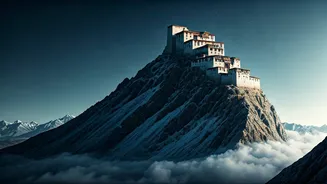
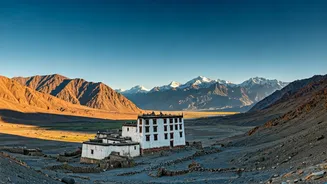
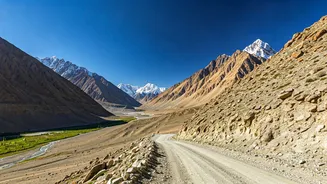
Part of what makes the Hemis Festival feel so transporting is its location. Tucked away in a starkly beautiful valley in Ladakh, a high-altitude desert often called 'Little Tibet,' the Hemis Gompa (monastery) is a world away from… well, just about everything.
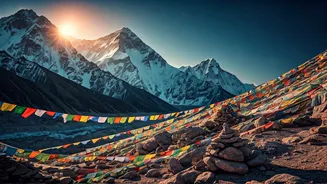
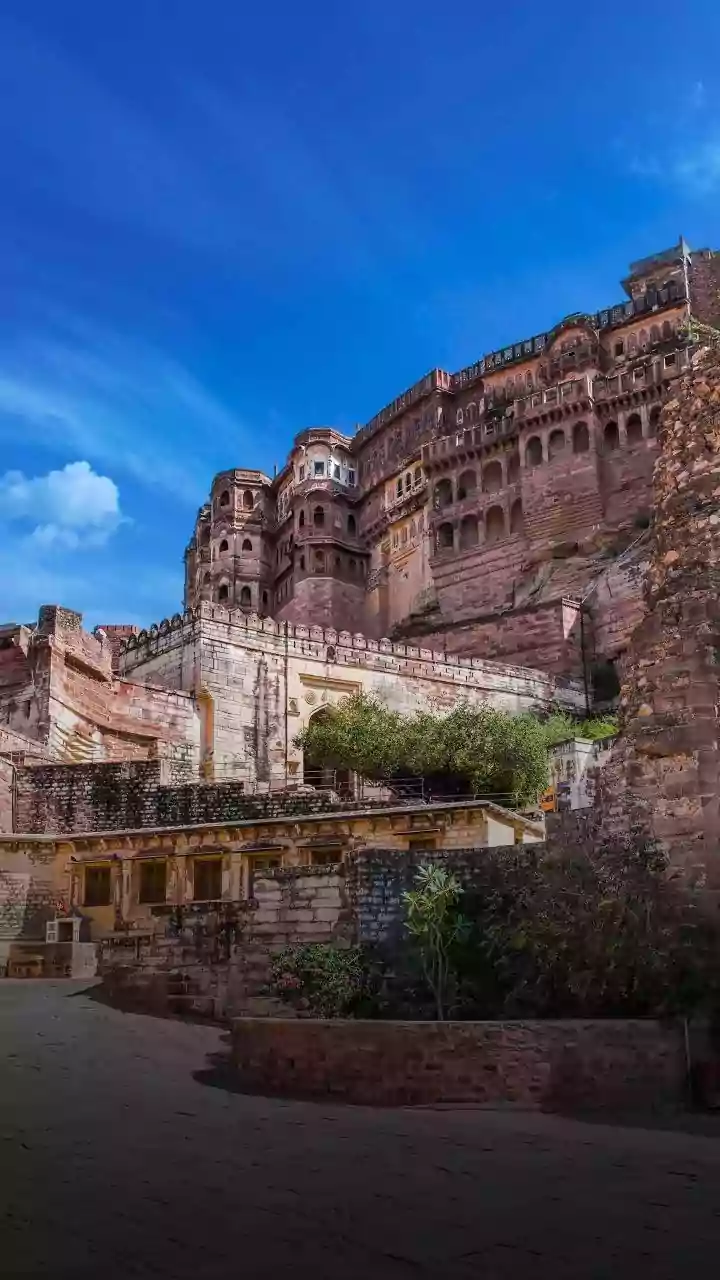
Founded in the 17th century, the monastery itself is a stunning example of Tibetan architecture, its white walls and colorful prayer flags a vibrant contrast to the barren, rust-colored mountains that cradle it. The journey to Hemis, whether by road over breathtaking mountain passes or by flight into the nearby city of Leh, strips away the familiar. The altitude, the crisp air, and the sheer scale of the landscape combine to create a sense of being on the roof of the world, a place where the spiritual feels palpably close.
Celebrating the 'Second Buddha'
At its heart, the Hemis Festival is a two-day birthday party. It commemorates the birth of Guru Padmasambhava, also known as Guru Rinpoche, the 8th-century Indian master credited with establishing Tantric Buddhism in Tibet. He is revered as a 'second Buddha,' a pivotal figure whose teachings are believed to have subdued the local deities and demons of the Himalayas, converting them into guardians of the faith. The festival is a living expression of this legacy. Every ritual, chant, and dance performed during the two days is a retelling of his story and a reaffirmation of the core Buddhist belief in the triumph of good over evil. For the monks and local Ladakhis, this isn't just a performance for tourists; it is a profound act of devotion and a way to receive blessings and protection.
The Hypnotic Dance of Gods and Demons
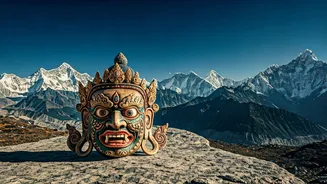
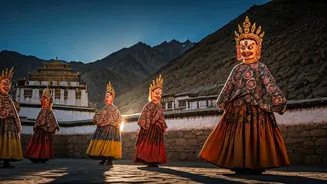
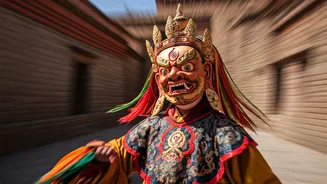
The festival's most iconic feature is the 'Cham,' a series of sacred masked dances performed by the monastery's monks. These aren't energetic, celebratory jigs; they are slow, deliberate, and deeply symbolic meditations in motion. Donning elaborate, often fearsome masks made of papier-mâché and wearing heavy silk brocade costumes, the monks transform into deities, protectors, and demons from Buddhist lore. The masks, some serene and others with terrifyingly wide eyes and bared fangs, represent the forces at play within the human mind and the wider cosmos. As they move in circular patterns around the monastery courtyard, the dancers enact the eternal struggle between wisdom and ignorance, compassion and wrath, ultimately culminating in the symbolic destruction of evil, represented by a dough effigy.
A Symphony of Sacred Sounds
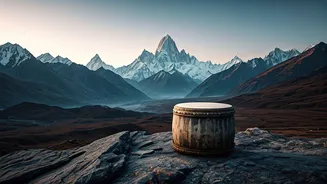
The visual spectacle is matched by an equally powerful soundscape. The otherworldly atmosphere is built on a foundation of sacred music that can feel both ancient and unsettling to the uninitiated. The deep, guttural drones of the ten-foot-long 'dungchen' horns echo off the mountainsides, a sound that seems to emanate from the earth itself. They are joined by the rhythmic clash of cymbals, the steady beat of large drums, and the piercing notes of smaller oboe-like instruments. Overlaid on this rich instrumental tapestry is the resonant, low-frequency chanting of the monks. The combination is not meant to be melodic in the Western sense; it's designed to alter consciousness, focus the mind, and create a sacred space for the divine to manifest.
The Unfurling of the Giant Thangka
For those lucky enough to attend in the right year, the festival offers a moment of truly epic scale. Once every twelve years, corresponding to the Tibetan Year of the Monkey, the monastery unveils its most prized possession: a gigantic, two-story-tall silk appliqué 'thangka' (a Tibetan Buddhist painting) of Guru Padmasambhava. This immense sacred scroll is slowly unfurled down the face of the monastery at dawn, a breathtaking sight that draws pilgrims from across the Himalayan region. Adorned with pearls and semi-precious stones, its display is believed to grant blessings and liberation to all who view it. This rare event adds a layer of once-in-a-generation significance, amplifying the festival's reputation as a pilgrimage destination.