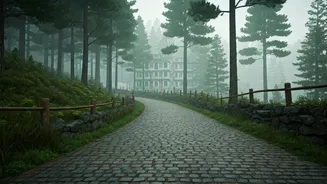

The Queen of the Hills: Mussoorie
Perched on a ridge with panoramic views of the distant snow-capped peaks and the sprawling Doon Valley below, Mussoorie earns its nickname, “The Queen of the Hills.” Established by the British in the 1820s as a refuge from the oppressive summer heat of the plains,
its colonial DNA is still visible everywhere. Grand, slightly faded hotels sit beside Gothic-revival churches, and the whole town seems to revolve around the Mall Road. This pedestrian-friendly thoroughfare is the town's social artery, a place for unhurried promenades, window shopping for local woolens, and stopping for a hot buttered corn on the cob from a street vendor. Mussoorie’s charm is less about a checklist of sights and more about atmosphere. It's about wandering up to the quieter, cantonment town of Landour, where ivy-covered cottages have names like “The Dingle” and “Kenilworth.” This is the home of famed author Ruskin Bond, and you can almost feel the literary spirit in the crisp mountain air. The vibe here is for explorers, readers, and those who believe the best part of a trip is an aimless walk that ends with a perfect cup of tea and a breathtaking view.
India's Lake District: Nainital
If Mussoorie is for the wanderer, Nainital is for the romantic. The town is built around the sparkling, emerald-green Naini Lake, a volcanic crater lake shaped like a crescent moon. Life here is oriented toward the water. The classic Nainital experience involves hiring a colorful paddleboat or a traditional wooden yacht and gliding across the lake’s surface, watching the reflection of the surrounding seven hills shimmer and distort with each gentle ripple. The Mall Road in Nainital also hugs the lakeshore, offering a similar promenade experience to Mussoorie but with the constant, calming presence of water. The town feels slightly more contained and family-focused. You can take a cable car up to Snow View Point for a stunning vista of Nanda Devi, India’s second-highest peak, or trek up to Tiffin Top (also known as Dorothy's Seat) for a picnic with a 360-degree view. Nainital's energy is gentler, a place to unwind by the water and let the rhythm of the town—and the boats on the lake—set a slower pace for your day.
The Meaning of Old-School Energy
So what, exactly, is this “old-school vacation energy”? It’s a throwback to an era before tourism became an industry of high-octane thrills and resort bubbles. These “hill stations” were founded on the simple, restorative principles of fresh air, scenic beauty, and gentle activity. The entertainment wasn’t a theme park; it was a long walk, a game of cards at a local club, or simply reading a book on a veranda overlooking the mountains. For an American audience, the closest comparison might be the classic resorts of the Catskills or the unhurried beachfront towns of Cape Cod before the boom. It’s a vacation from modernity itself. In Nainital and Mussoorie, Wi-Fi can be spotty, and the main attractions are the ones that have existed for over a century: the mountains, the lakes, and the pleasure of a leisurely stroll. It’s about being present in a place rather than just consuming it.
Choosing Your Throwback Vibe
While they share a common heritage, the two towns offer subtly different experiences. Mussoorie feels more expansive and literary, with its winding roads leading to hidden corners and its strong connection to the world of books. It’s a place to get happily lost. Nainital is more centered and serene, its energy drawn inward toward the magnificent lake at its heart. It’s a place to sit, reflect, and watch the world go by from a lakeside bench or a gently rocking boat. Your choice depends on the kind of quiet you’re seeking. Do you prefer the intellectual stimulation of a mountain walk filled with historical curiosity, or the peaceful contemplation inspired by a vast body of water? Both deliver on the promise of a vacation that feels less like a packed schedule and more like a deep, restorative breath.