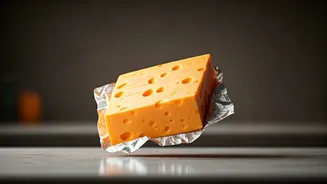







The Case Against Store-Bought Singles
We all grew up on them. They’re the star of many a late-night grilled cheese and the perfect melting cap on a backyard burger. But the American cheese most of us know isn't technically 'cheese.' It's a 'pasteurized process cheese food product.' To get
that uniform shape and indefinite shelf life, manufacturers rely on emulsifiers, oils, and a relatively low amount of actual cheese. The result is unparalleled meltability but often a lackluster, waxy flavor that coats the mouth. Making your own flips the script. You start with real, flavorful cheese—a sharp cheddar, a smoky gouda, a peppery Monterey Jack—and transform it into a slice that has all the convenience of the classic single but with none of the compromises. The flavor is a hundred times better, the ingredients are ones you can pronounce, and the satisfaction of peeling a perfect slice of cheese you made yourself is unbeatable.
The Secret Weapon: Simple Food Science
So how do you get a block of aged cheddar to melt into a smooth, pliable slice that doesn’t turn into a greasy, separated mess? The answer is an emulsifying salt, most commonly sodium citrate. Don’t let the name intimidate you; it’s a simple salt derived from citric acid (the stuff in lemons and limes) and it’s the key to silky smooth cheese sauces, quesos, and, yes, homemade cheese slices. In cheese, milk proteins are tightly wound. When you heat them, they can seize up and squeeze out the fat, creating a clumpy, oily mess. Sodium citrate works by grabbing onto the calcium in the cheese, forcing those proteins to relax and unwind. This allows them to bind with the water and fat in the mixture, creating a perfectly stable, incredibly smooth emulsion. It’s the magic ingredient that turns your favorite block of cheese into a liquid that will chill into a sliceable, re-meltable solid.
Your Ingredient and Equipment Checklist
This isn't a massive project. You need minimal equipment and just a few key ingredients. You can find sodium citrate online or at specialty food or brewing supply stores. **Ingredients:** - 8 ounces (about 2 cups shredded) of a good melting cheese (sharp cheddar, Colby, Gruyère, or a mix) - 1 tablespoon sodium citrate - ½ cup liquid (water, milk, or even a light beer for flavor) - 2 tablespoons unsalted butter **Equipment:** - A small saucepan - A whisk - A small loaf pan or any other rectangular container (about 8x4 inches is perfect) - Plastic wrap or parchment paper
The Five-Minute Method
The active cooking time for this is incredibly short. The hardest part is waiting for it to chill. 1. **Prep Your Mold:** Line your loaf pan or container with plastic wrap, leaving plenty of overhang on the sides. This will make it easy to lift the cheese block out later. Lightly grease the plastic wrap if you’re concerned about sticking. 2. **Start the Emulsion:** In your small saucepan, combine the liquid (water, milk, or beer) and the sodium citrate. Heat over medium-low, whisking until the sodium citrate is completely dissolved. The liquid will be clear. 3. **Melt the Cheese:** Turn the heat down to low. Add the shredded cheese to the pot in handfuls, whisking constantly as it melts. Keep adding more cheese as the previous batch incorporates. It will look lumpy at first, but keep whisking! Suddenly, it will transform into a glossy, smooth, liquid cheese sauce. This is the magic happening. 4. **Finish and Pour:** Once all the cheese is melted and the sauce is perfectly smooth, whisk in the butter until it’s fully incorporated. Immediately pour the hot cheese mixture into your prepared pan. Gently tap the pan on the counter to level it and remove any air bubbles. 5. **Chill Out:** Let the cheese cool on the counter for about 20 minutes before covering it with plastic wrap (press it directly onto the surface to prevent a skin from forming). Transfer the pan to the refrigerator and let it chill until completely firm, at least 3-4 hours.
How to Slice, Store, and Use
Once your block is firm, use the plastic wrap overhang to lift it out onto a cutting board. You can now slice it to your desired thickness. For classic sandwich slices, cut the block into squares that fit a slice of bread. To prevent the slices from sticking together in the fridge, place a small square of parchment paper between each one. Stored in an airtight container or a zip-top bag, your homemade cheese slices will last for a couple of weeks in the refrigerator. Use them anywhere you’d use a regular slice of American cheese: draped over a sizzling burger patty, tucked into a grilled cheese sandwich for the most epic cheese pull of your life, or melted over a pile of scrambled eggs. You’ve just leveled up your sandwich game for good.