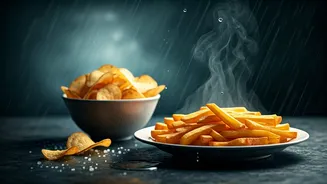









The Science of a Gloomy Day
That urge for pasta or cookies when it’s pouring outside isn’t just in your head—it’s in your brain chemistry. The primary driver is a drop in sunlight. Exposure to sunlight helps your brain produce serotonin, a neurotransmitter that acts as a natural
mood stabilizer. When it’s dark and overcast for days on end, your serotonin levels can dip, leaving you feeling sluggish, irritable, and a little bit down. This is the same basic mechanism behind the more severe Seasonal Affective Disorder (SAD). Your body, in its infinite wisdom, knows a shortcut to a serotonin boost: carbohydrates. Eating sugary or starchy foods triggers a process that temporarily increases serotonin production, leading to a fleeting feeling of happiness and calm. Your craving is your brain’s clumsy attempt to self-medicate its way out of a gloomy-day funk.
Conditioning and Comfort
Science aside, there’s a powerful psychological component at play. For many of us, rainy days are intrinsically linked to the idea of staying indoors, getting cozy, and indulging. Think back to childhood: a rained-out soccer game might have been salvaged with hot chocolate and a movie. We’ve been culturally and personally conditioned to associate dreary weather with specific “comfort foods.” These foods are often warm, soft, and calorie-dense, providing not just a chemical boost but an emotional one. They evoke feelings of safety, nostalgia, and care. This learned behavior is incredibly strong. When you reach for a grilled cheese sandwich on a rainy afternoon, you’re not just feeding a physical craving; you’re participating in a comforting ritual you’ve practiced for years.
The Caution Flag Goes Up
So, if it’s a natural response, what’s the problem? The concern doctors raise is about frequency and quality. An occasional indulgence isn’t an issue. But if your default response to every gray day is a cascade of highly processed, high-sugar, and high-fat foods, it can create an unhealthy pattern. Relying on these foods for a mood lift can lead to energy crashes, weight gain, and a higher risk for chronic conditions over time. The temporary mood boost from a sugary snack is often followed by a slump, perpetuating a cycle of craving and crashing. Furthermore, it teaches your body to rely on an external fix for a mood dip, rather than building more resilient, internal coping mechanisms. The “caution” is about mindfulness—recognizing the pattern and understanding that what feels like a solution might be contributing to a longer-term problem.
Healthier Ways to Chase the Blues Away
Managing these cravings doesn’t mean depriving yourself entirely. It’s about making smarter, more deliberate choices. Instead of simple carbs, opt for complex carbohydrates that provide a more sustained release of energy and support serotonin production without the crash. Think whole-wheat pasta, oatmeal, or a hearty vegetable soup. A warm cup of herbal tea can often satisfy the desire for warmth and comfort without the calories. Beyond food, consider other ways to boost your mood. A short, indoor workout can release endorphins, another group of feel-good brain chemicals. If you’re regularly affected by gloomy weather, investing in a light therapy box that mimics natural sunlight can make a significant difference. You can also try calling a friend or engaging in a hobby. The goal is to broaden your toolkit for managing rainy-day moods so that a tub of ice cream isn’t your only tool.