



The Land of Clouds
Perched on the edge of a plateau in India’s Meghalaya state—whose name aptly translates to “Abode of the Clouds”—sits the town of Sohra, better known by its colonial-era name, Cherrapunji. For decades, it held the title of the wettest place on Earth,
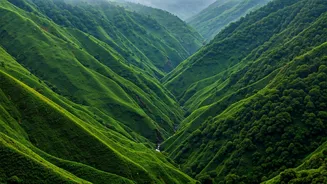
and while the nearby village of Mawsynram now often claims that record, the distinction is almost academic. This is a region saturated by moisture, a place where mist clings to lush, rolling hills and the air feels heavy with impending rain. Unlike destinations that shutter their doors during the wet season, Cherrapunji comes alive. The monsoon, which pounds the region from roughly June to September, is not an inconvenience; it’s the main event.
When the Monsoon Arrives
The arrival of the monsoon is a dramatic, all-encompassing sensory experience. It begins not with a gentle pitter-patter but with a gathering darkness, as moisture-laden clouds, funneled up from the Bay of Bengal, collide with the Khasi Hills. Then the sky opens. The rain is a constant, percussive roar, a sound that becomes the soundtrack of daily life. It’s a force that transforms everything. Dry riverbeds become raging torrents overnight. Quiet valleys echo with the sound of a thousand fledgling streams. The landscape, already a startling shade of green, deepens into an impossible spectrum of emerald, jade, and moss. For the local Khasi people, this is simply the rhythm of life, a season of immense power and renewal.
The Star Performer: Nohkalikai Falls
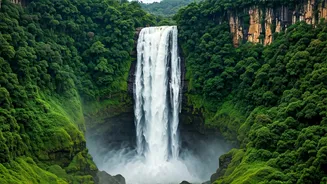
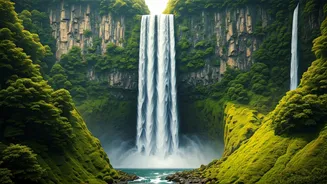
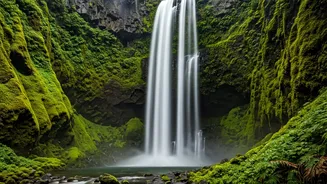
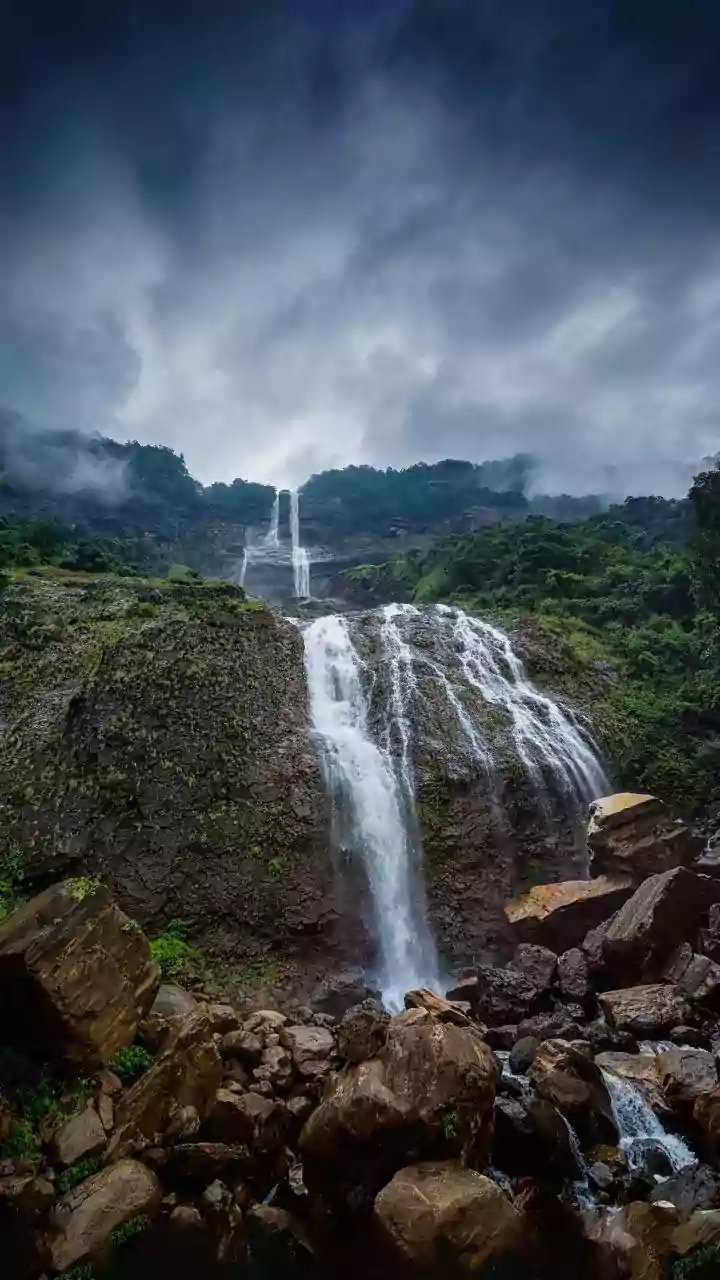
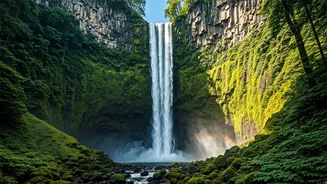
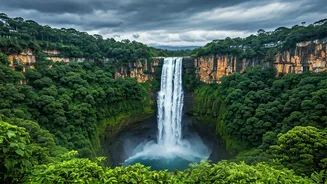
If waterfall season in Cherrapunji is a grand production, then Nohkalikai Falls is its undisputed headliner. As India's tallest plunge waterfall, it is a staggering spectacle. During the monsoon, a single, powerful column of water drops uninterrupted for over 1,100 feet from a verdant clifftop into a deep, turquoise pool below. The sheer force creates a constant plume of mist that rises from the basin, often shrouding the falls in an ethereal haze. Its name carries a somber local legend of a woman named Likai, adding a layer of tragic folklore to its natural grandeur. To stand at the viewpoint overlooking Nohkalikai is to feel humbled by nature’s raw, untamable power.
A Chorus of Cascades
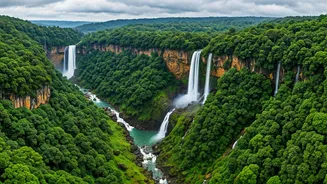
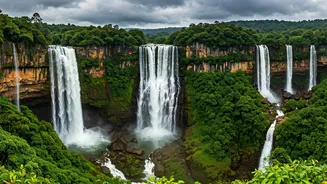
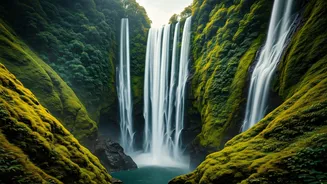
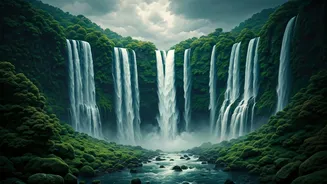
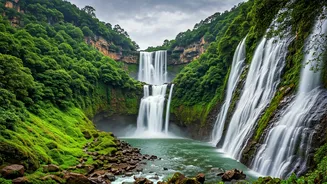
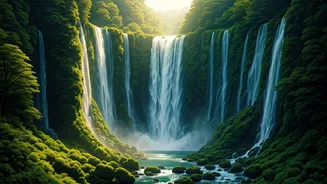
While Nohkalikai might be the main attraction, it performs as part of a vast ensemble. The entire plateau becomes a stage for countless other waterfalls. Most famous among them are the Nohsngithiang Falls, also known as the Seven Sisters Falls. Here, seven distinct streams of water tumble side-by-side down a wide limestone cliff, creating a majestic curtain of water that is best viewed in the late afternoon, when the sun sometimes hits the spray just right. Elsewhere, the three-tiered Kynrem Falls cascades down in grand steps. But beyond these named giants, the real magic lies in the countless unnamed waterfalls that appear during a downpour, striping every cliff face and hillside with fleeting ribbons of white.
Life Forged by Water
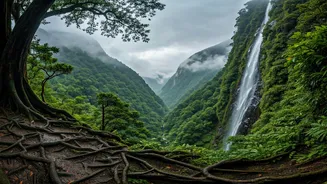
The influence of the rain extends beyond the waterfalls. This is the home of the famous living root bridges, a breathtaking example of bio-engineering and human ingenuity. For centuries, the Khasi people have guided the aerial roots of rubber fig trees across rivers and gorges, weaving them together until they form strong, living structures that can withstand the powerful monsoon floods. These bridges, which can take decades to mature, are a living testament to a culture that has learned not just to survive the intense rainfall, but to partner with it. They are as much a part of the region’s identity as the rain itself, a quiet, patient counterpoint to the thunderous roar of the falls.