





Walk Across a Bridge That's Alive
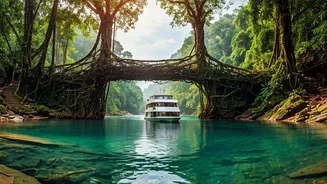
Deep in the misty rainforests of Meghalaya, a state in northeastern India, you won't find bridges made of steel or concrete. Here, the Indigenous Khasi and Jaintia peoples have mastered a form of living architecture that feels pulled from a fantasy novel.
For centuries, they have guided the aerial roots of the rubber fig tree (*Ficus elastica*) across rivers and ravines, weaving them into functional, sturdy bridges that grow stronger over time. These are the living root bridges, or *jingkieng jri*. This isn't a quick construction project; it's a multi-generational commitment. A new bridge can take 15 to 30 years to become fully functional, a testament to a community's patience and profound connection to their environment. Walking across one is a humbling experience. The tangled, muscular roots form a pathway underfoot, dappled in the dim forest light. Some are simple, single-span structures, while others are complex, double-decker marvels. Unlike man-made infrastructure that decays, these bridges are self-renewing, becoming more resilient as they age. They represent the ultimate in sustainable design—a partnership between humanity and nature, not a conquest of it. This is slow travel at its most profound, an encounter with an organic wonder that asks you to appreciate patience, tradition, and the quiet power of the natural world.
Drift Through Cultures on the Mekong River
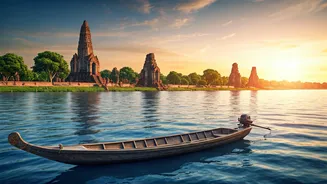
If root bridges are about being grounded, a river cruise is about letting go. And few journeys offer a more mesmerizing cultural immersion than a trip down the Mekong River. Snaking its way from the Tibetan Plateau through China, Myanmar, Laos, Thailand, Cambodia, and Vietnam, the Mekong is the lifeblood of Southeast Asia. A cruise here is not about rushing from one tourist site to the next; it’s about observing life unfold from the water. From the deck of a riverboat, you’ll watch floating markets burst into life at dawn, with vendors hawking vibrant fruits and fragrant spices from their long-tail boats. You’ll glide past ancient temples, remote monasteries where saffron-robed monks go about their daily rituals, and lush green rice paddies worked by farmers in conical hats. Stops along the way might include Cambodia's Angkor Wat, the largest religious monument in the world, or the bustling riverfront of Vietnam's Ho Chi Minh City. The river dictates the pace, forcing you to slow down and absorb the sights, sounds, and smells of a world completely different from your own. It's a journey that connects landscapes, histories, and the everyday lives of millions.
Sail Past Ancient Wonders on the Nile
For a journey that feels like a voyage through time itself, nothing compares to a cruise on the Nile River. For millennia, this river was the cradle of Egyptian civilization, and today it serves as a floating highway to its greatest treasures. While large cruise ships ply its waters, the more intimate experience is often found on a *dahabiya*, a traditional shallow-bottomed sailboat that allows for a quieter, more flexible itinerary. Imagine waking up to the sun rising over a grove of date palms and spending your day exploring the majestic temples of Luxor and Karnak, the Valley of the Kings, or the stunning Temple of Philae near Aswan. In the evenings, you can sit on deck under a canopy of stars, listening to the gentle lapping of the water against the hull. The beauty of a Nile cruise is the seamless blend of epic history and tranquil relaxation. The monumental scale of the ancient world is right there on the riverbank, accessible without the chaos of overland travel. It’s a comfortable, elegant way to peel back the layers of one of humanity’s oldest and most fascinating stories.
Sip and Savor Along Portugal's Douro River
Not all iconic river journeys are in far-flung, exotic locales. For a taste of European charm, the Douro River in northern Portugal offers a completely different but equally compelling experience. This is the heart of Port wine country, and a cruise along its waters is a feast for the senses. The landscape is a stunning UNESCO World Heritage site, with steep, terraced vineyards rising dramatically from the riverbanks. It's a man-made vista that, like the root bridges, shows a deep, historic shaping of the natural world. Cruises here are often focused on gastronomy. You’ll travel from the historic city of Porto, with its iconic bridges and ancient wine cellars, deep into the sun-drenched valley. Along the way, you’ll stop at *quintas* (wine estates) for tastings of Port and other local varietals, paired with delicious regional cuisine. The journey is leisurely, punctuated by stops in sleepy, charming villages and meals enjoyed with panoramic views of the vine-covered hills. It's a travel goal for those who believe a destination is best understood through its food, its wine, and its unhurried rhythm.