







More Than Just Houseplants
First, let’s get clear on what biophilic design actually is. The term “biophilia,” popularized by biologist E.O. Wilson, describes humanity’s innate tendency to seek connections with nature. In architecture and interior design, this translates into creating
spaces that cater to that deep-seated need. It’s not simply about placing a fiddle-leaf fig in the corner of a room. True biophilic design is a holistic approach that integrates nature in three core ways: through direct experiences (like sunlight, plants, and water features), indirect experiences (using natural materials like wood and stone, or nature-inspired patterns and colors), and through spatial design that mimics natural environments (creating cozy nooks for refuge and open areas with clear views). It’s an intentional strategy to make our built environments feel less artificial and more alive.
An Antidote to Urban Overload
So, why is this catching on so strongly in India? A huge part of the answer lies in the country’s rapid urbanization. Megacities like Mumbai, Delhi, and Bengaluru are epicenters of economic growth, but that growth comes at a cost: relentless noise, air pollution, and a landscape dominated by concrete and steel. For millions of residents, daily life involves navigating crowded streets and living in high-rise apartments with limited access to parks or green spaces. Biophilic design has emerged as a powerful antidote. It offers a way to carve out a personal oasis amidst the urban chaos. By turning an apartment into a lush, light-filled retreat, homeowners are not just making a style statement; they are actively managing the stress of city living and reclaiming a sense of tranquility that the outside world often fails to provide.
A Modern Take on Tradition
While the term “biophilic design” may be modern, its principles are deeply rooted in traditional Indian architecture. For centuries, Indian homes were built in harmony with their environment. Think of the central courtyards, or *aangans*, that served as social hubs and natural cooling systems, allowing light and air to filter through the home. Or the wide verandas that blurred the line between indoors and outdoors. These weren't just decorative features; they were practical solutions for living comfortably in a tropical climate. Today’s architects and designers are reinterpreting this heritage for contemporary apartment living. A balcony overflowing with plants becomes a modern veranda. A large window framing a sliver of sky replaces the open courtyard. This connection to cultural memory makes the trend feel authentic and resonant, rather than like a fleeting Western import.
The Global Wellness Influence
The push for biophilia is also fueled by the global wellness movement, which has found fertile ground among India’s growing middle and upper classes. There's a rising awareness that our surroundings have a profound impact on our physical and mental health. Studies have shown that interacting with nature, even indoors, can lower blood pressure, reduce stress hormones, and boost creativity. As people increasingly view their homes as a cornerstone of their well-being, design choices become more intentional. An air-purifying snake plant isn't just decor; it's a tool for a healthier life. Maximizing natural light isn’t just aesthetic; it’s a way to regulate circadian rhythms. This health-conscious mindset has turned biophilic principles from a niche interest into a mainstream aspiration.
The Look and Feel of Indian Biophilia
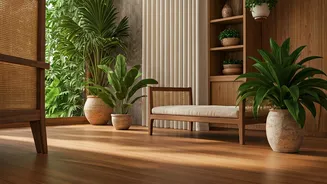
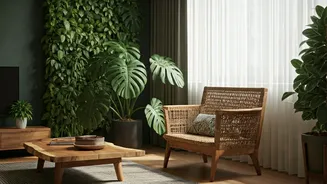
In practice, Indian biophilic design has a distinct aesthetic. It often emphasizes locally sourced and sustainable materials. You’ll see furniture made from cane, rattan, and reclaimed wood. Floors might be polished concrete or earthy terracotta tiles. Textiles are often natural and handwoven, like jute rugs and cotton upholstery. Living “green walls” have become statement features in upscale apartments, and small indoor water features provide soothing ambient sounds. The color palette leans heavily on earthy tones—terracotta, ochre, sage green, and warm beige—punctuated by the vibrant green of plant life. It’s a style that feels both sophisticated and grounded, creating spaces that are calming, breathable, and deeply connected to their cultural and environmental context.